- Dog-human relationship: beyond the concept of “owner”
- The dog’s ecological niche: the roles between dog and human
- How does the dog choose his favorite person?
- How to understand if the dog loves you
- How long does it take for the dog to choose his “owner”?
- Can the dog have more than one person of reference?
- Does a female dog become more attached to a male “owner”?
- The dog’s affective memory
- How to create and strengthen the bond with your dog
- Common behaviors: frequently asked questions
- What is the dog breed most attached to the “owner”?
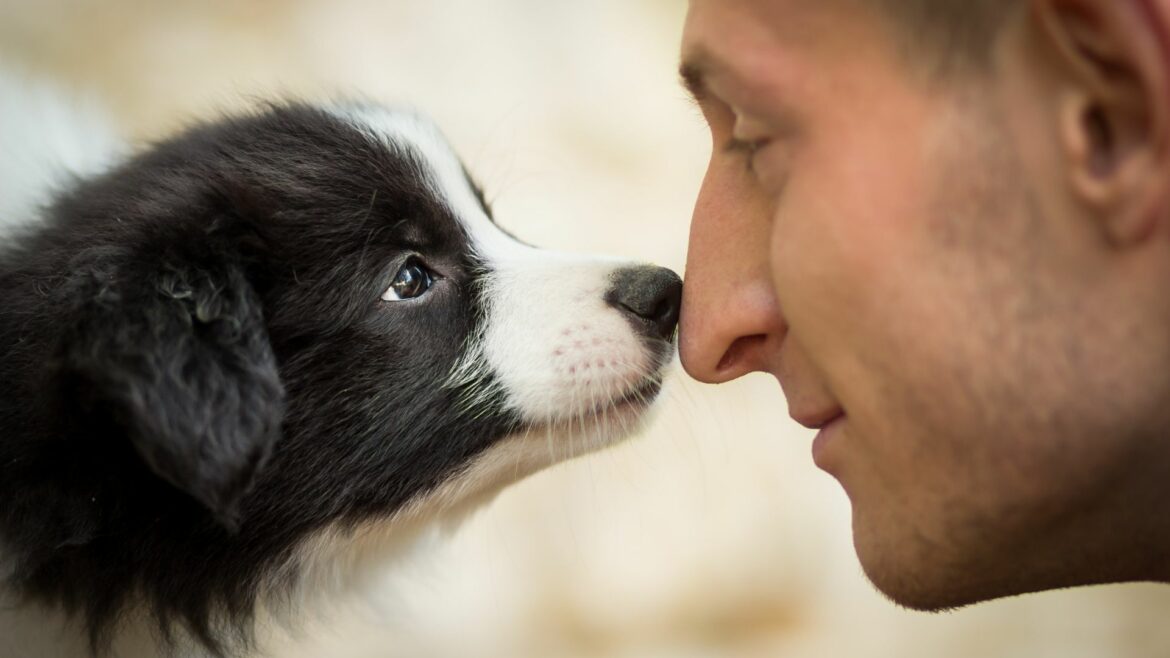
How can you understand if the dog has chosen us as a point of reference?
The signs, often, are unmistakable: from being constantly under his radar to the sadness that appears in his big eyes when we leave the house without him (or her)… and, in some breeds, to behaving like an adorable “mussel” that has no intention of detaching from us.
The topic deserves to be treated in a deep way. Understanding why a dog chooses a person as a point of reference means, in fact, exploring the motivations that are at the basis of this very special bond.
Before starting, however, let us underline an important aspect: in this article we refer to the role of “owner” but, thanks to the most current studies and also to a more equal vision of animals, this term is outdated, in favor of words such as “pet mate,” “pet parent” or “conscious owner.”
Dog-human relationship: beyond the concept of “owner”
The term “owner” presupposes a hierarchy and possession. It goes without saying that the dog, like every living creature on this planet, must be considered a free creature and one that belongs to no one.
Cats are masters at this, because with their behavior they immediately make things clear, making us understand that they are free beings and that we should be grateful every day because they allow us to be their humans of the heart 🙂.
Dogs have different attitudes, but it is nevertheless time to abandon the word “owner,” because the relationship between humans and animals is based on collaboration, mutual respect and affection, not on domination or hierarchy.
Of course, the pet parent is the reference figure who gives them safety, care, guidance and unconditional love, but dogs do not look for a “leader,” but rather a life companion they can trust.
And trust is precisely one of the necessary prerequisites for the dog to choose us as his humans of reference.
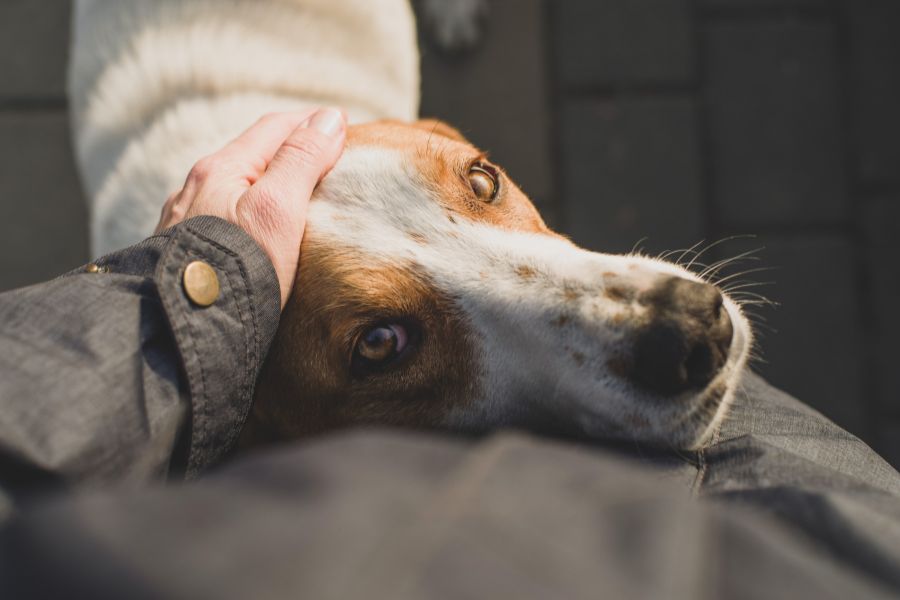
How to understand if the dog has chosen you as his “owner”? The signs are often clear and also include the desire to stay close to you.
The dog’s ecological niche: the roles between dog and human
To understand how the dog chooses his favorite person, it is good to introduce the concept of ecological niche.
The ecological niche is the dog’s role in the ecosystem. Scholars have defined groups of dogs in relation to the niche based on their form of sustenance, therefore Pets, the dogs that live in families, and Free Ranging Dogs, the dogs free to wander.
The latter are divided into:
- Strays, dogs that were previously in a family and now are no longer and are looking for their “place in the world”;
- Feral dogs, completely independent from humans and used to living in nature;
- Village dogs, dogs that do not live in families but in neighboring areas, perhaps spending time with people from time to time to receive food.
This last group is quite interesting and is much studied, because it is the modern representation of the process that led wolves to approach humans, originating the domestication of the species.
And what is there, at the basis of this domestication, if not trust?
This makes us understand that trust is an essential ingredient in the dog-human relationship and is a fundamental aspect when it comes to choosing the human of reference.
How does the dog choose his favorite person?
When we ask ourselves how the dog chooses his favorite person, there is no magic formula, but a set of factors that work together: early experiences, quality of interactions and emotional involvement.
First, however, let us take a step back and address the heart of this topic: what happens when we go to the shelter or to a breeding kennel to choose a dog? Who chooses whom? And what mechanisms are triggered?
Here is an example: we go to the shelter or to a breeding kennel to choose our four-legged life companion and, once we cross the door, what for us is magic happens: the dog looks at us, comes closer to us, perhaps asks for cuddles and wags his tail, all behaviors that make us think that he has elected us as his humans of the heart.
The question is: how and why does this happen?
Let us ask scientific research for help, which has repeatedly underlined the fact that the dog comes into contact through the gaze and through other behaviors that we can define as “social.”
In particular, the gaze becomes a bridge of trust, followed by behaviors such as coming closer, jumping on us, wagging the tail… all instinctive impulses that are a sort of scouting ahead, because the dog is evaluating that social contact in terms of welcome, positivity and, above all, trust.
But, then, why did that dog choose precisely us? There is no single answer; rather, we can underline that the dog is predisposed to create bonds with humans who reciprocate welcome, attention, closeness and who, above all, show that they deserve his trust.
If we immediately reciprocate his attention, in just a few minutes a relationship of attachment and affinity can be created, first perceptive and then logical.
Let us not forget, in fact, that when we are with four-legged hearts, we humans produce more oxytocin, also called “the love hormone” because it stimulates empathy, trust and the willingness to feel affection.
And so, when that furry one celebrates us and looks at us with eyes that seem to say “Have you seen me,” a mutual bond is being created, one that may last forever.
Moreover, some studies have shown that dogs living in shelters quickly form bonds with the new humans they meet, especially if they have had the fortune (within the misfortune) of having had volunteers beside them who cared for them with love.
Now let us see how the dog chooses his favorite person when he has already been welcomed into the home.
- The socialization period (3-14 weeks): studies have defined that between 3 and 5 weeks of life puppies have a positive emotional state, they are relaxed and can more easily associate new stimuli with this positive mental framework. This is a very important period, because dogs experience primary socialization, during which the mother teaches them everything they need to know: from bite inhibition, to what growling means, from food hierarchization to calm and control, but also to doing their needs and how to clean themselves.
For this reason, puppies must stay with their mother and little brothers or little sisters for the first two and a half months, all the more so because the mother also acts as an intermediary in secondary socialization, the period in which puppies get to know the environment and other species, including us humans. In this phase, it is important to accompany dogs in discovery without ever forcing them and, always gradually, making them live positive experiences of care and affection that will shape their relationship with the environment and, above all, with people; - Positive interactions and consistency: dogs choose the human of reference based on the quality of interactions. The furry ones, in fact, choose those who spend more time with them, those who care for them, those who play and cuddle them, but also those who are consistent in rules and routines. These are all fundamental aspects for the dog’s well-being, who looks for reliable and also predictable points of reference. Let us think of the walk: the little heart already knows who will accompany him, when and, very often, where he will go to run around. This (among others) is an action of presence, care and love that contributes to making him choose the person of reference.
- Dedication and emotional involvement: dogs experience a range of feelings including empathy and, for this reason, they are sensitive to emotional attention. This is why, from an emotional point of view, the dog chooses the human of reference among those who:
- know how to recognize and respond to his signals, offering him cuddles or presence when he feels the need;
- express authentic emotions and feelings, which he perceives as positive and reassuring.
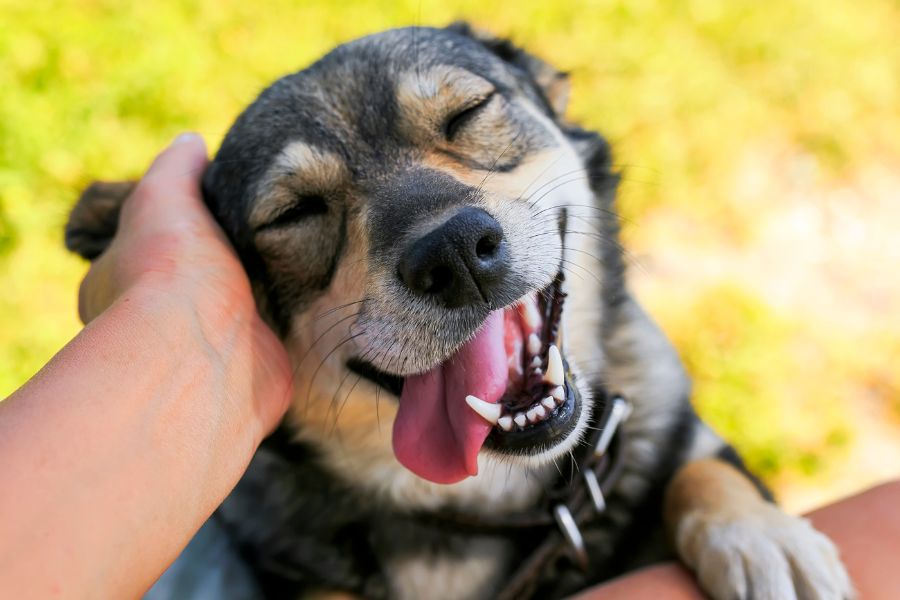
If the dog seeks you out, looks at you and is happy when he is with you, then it is very likely that he has chosen you as his human of the heart.
How to understand if the dog loves you
Let us therefore come to the heart of this article: how to understand if the dog has chosen us as conscious owners? What are the signs that communicate this to us?
There are concrete and observable signs:
- He eats calmly in our presence;
- He lets his paws, tail, ears be touched without showing nervousness;
- He willingly accepts veterinary care or grooming when we are present (even if for some dogs it may be very difficult, especially if they have suffered trauma or have had negative experiences);
- He does not show signs of stress such as continuous and unexplained yawning, licking himself compulsively or avoiding us;
- He falls deeply asleep in our presence.
It must, however, be considered that attitudes change depending on the breed and individuality. From the Husky to the Poodle, dogs show a clear interest in the human of reference, but they can manifest it in very different ways.
Let us think, for example, of a Greyhound, generally little inclined to physical contact, but who never loses sight of the person he is bonded to and follows them with his gaze, always maintaining a silent and constant presence.
Or of a Setter, who expresses his preference through the pure joy he feels when he can share moments of freedom with his human, running through woods and fields with contagious enthusiasm.
Are these not also signs that the dog has a deep bond with his conscious “owner”?
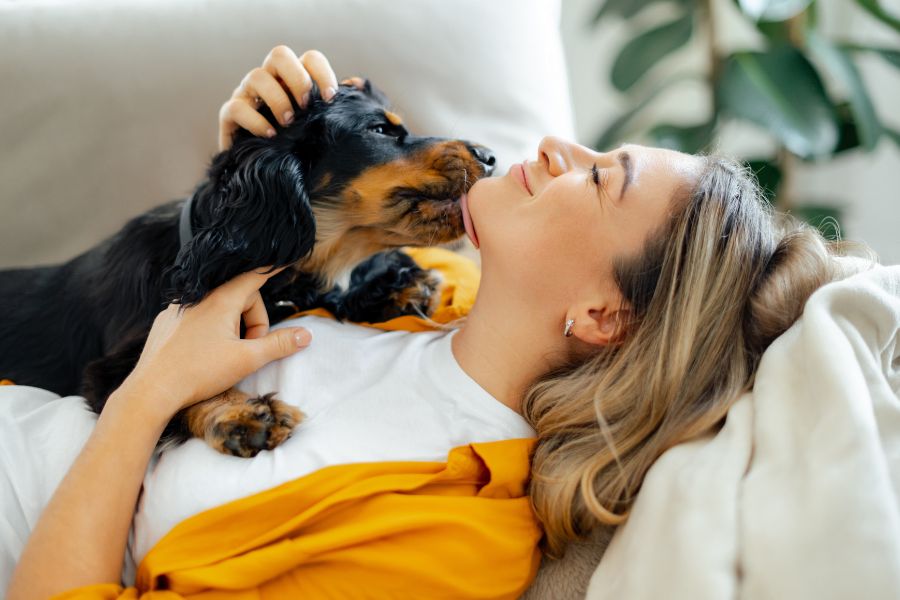
Some dogs show that they have chosen you as a reference with boundless affection and… lots and lots of kisses!
How long does it take for the dog to choose his “owner”?
Sharing experiences, mutual knowledge and, once again, trust: these are the prerequisites that make the dog choose his conscious “owner.”
But how much time is needed for this to happen? The answer is that there is no standard time, but rather variable factors, also because there are dogs that show a strong sense of belonging and others that are more “free spirits.”
Here are the factors that influence the time it takes the furry one to choose his human of reference:
- Age of the dog: as seen, the secondary socialization period, the one in which the dog gets to know the world and the creatures that inhabit it, including us humans, takes place when he is little, approximately up to three months of life.
If we have the opportunity to be with him during these weeks, it will be more likely that the little heart establishes a relationship of attachment with us. If, instead, we adopt an adult or elderly dog, more time may be needed, especially if he has a difficult past, which leads him to be distrustful toward humans, and this brings us to the next point; - Past experiences: dogs have an episodic memory, linked to episodes that happened in the past, and they also have an affective one, meaning the dog remembers each event based on the emotion he felt and perceived at the exact moment in which he experienced it. If the furry little heart has experienced traumas or negative experiences, when he happens to come into contact again with objects or people that remind him of them, he may tend to pull away and move away. For this reason, if we know that the dog has suffered traumas, more time may be needed to establish a deep bond, as well as patience, which will be abundantly rewarded with all the love the dog will know how to give us in the future;
- Individual personality of the dog: as seen, some dogs are more sociable than others and show attachment in different ways. Here it is not a question of time, but rather of breed and individuality, which can lead the dog to recognize the conscious “owner” in a way that is perhaps more “cold” compared to others. The important thing is to know these aspects of the dog in order to be as aware as possible of the behaviors, but also and above all of the dog’s physical and emotional needs and necessities;
- Quality and frequency of interactions: if the dog is used from puppyhood to receiving care, attention, games and interaction, the time needed for him to recognize his conscious “owner” will be shorter compared to a dog who receives attention sporadically. The rule, in any case, is to give our best in the relationship with him or her, so that he or she always feels loved and protected;
- Patience and consistency of the pet parent: attachment is a gradual process that, in order to be healthy, requires patience and consistency, two fundamental ingredients to create a healthy and lasting bond with our four-legged friend.
Basically, quantifying in days the time needed for the dog to elect his pet mate is not possible. If with puppies the bond can form in a few weeks, with adult or elderly dogs more time may be needed, perhaps a few months, which will in any case be a fantastic period of discovery for both.
Can the dog have more than one person of reference?
How many times have we heard someone say “I am the one who feeds the dog, but then all his attention goes to my husband!”, or “I take care of him all day, but as soon as my son strokes him, he has eyes only for him!”
The dog knows who his point of reference is and shows a marked preference for this person.
This, however, does not prevent him from recognizing important affections in other members of the family, and this is a good thing, it is normal and healthy, as long as all members of the family are involved in a coherent and coordinated way in caring for the furry one.
If, for example, we take care of feeding the dog, but other people in the family take him for walks or give him cuddles and scratches continuously, the dog will feel affection for everyone and this is healthy because it shows that he has a good social life.
Is it true that a female dog becomes more attached to a male “owner”? Studies tell us that this is NOT true and that a great deal is based on the quality of the relationship.
Does a female dog become more attached to a male “owner”?
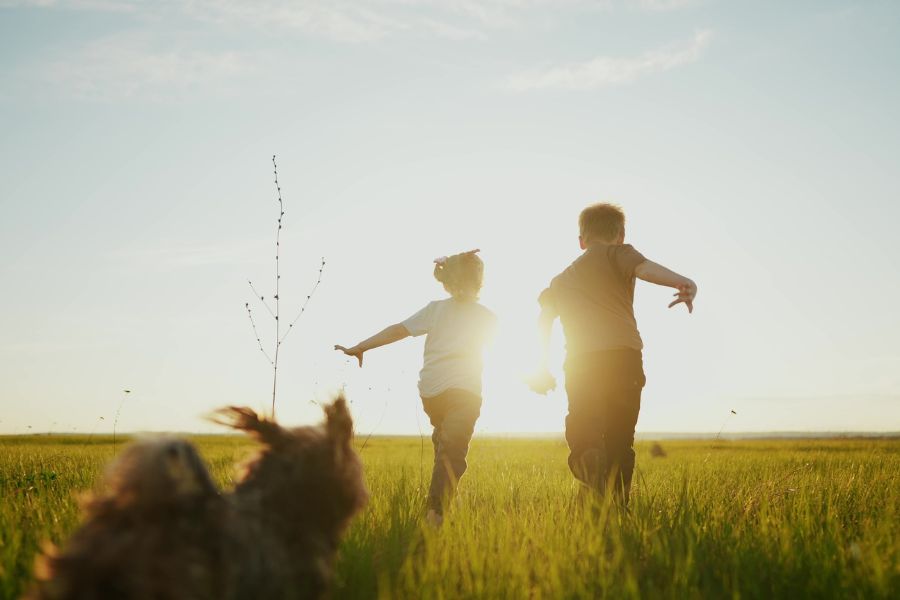
On social media there are videos in which two pet mates, together with their dog, start running to understand which of the two the dog will chase. The dog usually chases only one of the two and this behavior may suggest that he elects his human of the heart.
In this, as in the case of the female dog who becomes more attached to the male pet mate, we speak of “false myths.”
The “girls” are always adorable, but there is no evidence that dogs have preferences linked to the gender of the pet parent.
In other words, the sex of the person does not matter, but rather the quality of the relationships we establish with them, the time spent together, consistency and the affection shown.
We may have heard phrases such as “My dog is female, that is why she loves me so much,” and this is a false myth, which may perhaps depend on previous experiences, because affection has no gender connotations.
Rather, the way of expressing the preference for the human of the heart depends, as seen, on how we relate to him, on the time and emotions we dedicate to him and, not least, on his breed and individuality.
The dog’s affective memory
Online there are some videos of people who leave for a trip and, upon returning, show how their dog remembers them by giving them a sea of celebrations.
Given that it is not right or ethical to leave one’s dog alone, unless extremely serious situations occur or there are no alternatives, everything is connected to the dog’s affective memory, which we talked about in this article.
The dog remembers the places, the objects and, above all, the people he loves, and this shows how deep and lasting the emotional bond he can establish with us is.
This is also intertwined with episodic memory: if the little heart has lived happy moments with us, he creates positive memories that remain impressed and are “retrieved” when he sees us again, even if some time has passed.
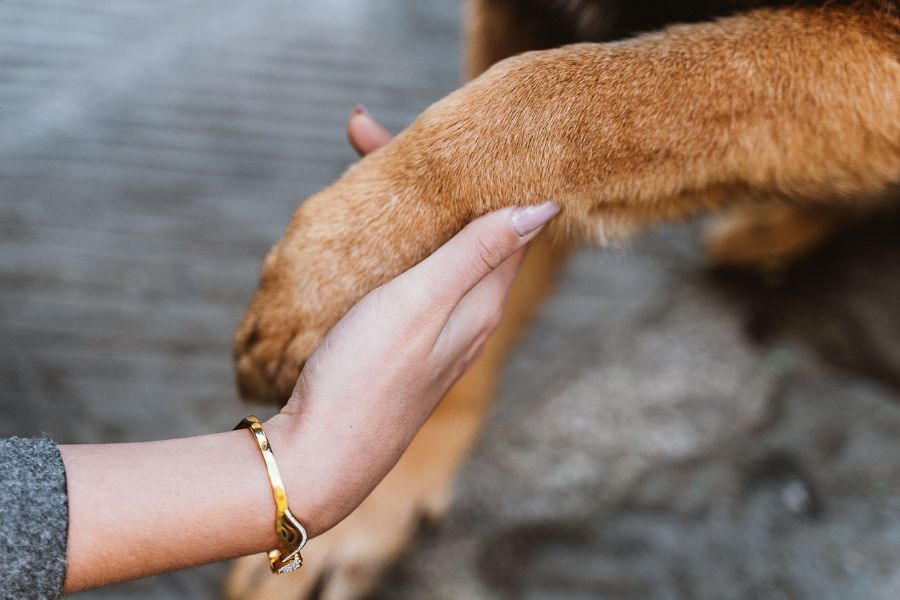
Quality time, games and a world of cuddles help strengthen the bond with one’s dog.
How to create and strengthen the bond with your dog
The relationship with the dog has a starting point but does not have an arrival point, which is why it is good to consider the bond as something that can grow, mature and also evolve over time.
That said, there are attitudes and actions that we can put into practice to improve the bond with our four-legged heart:
- Let us always communicate with consistency: we and dogs objectively speak two different languages, but we know that furry ones know how to decode verbal messages and also tone and intonation. Let us therefore try to address them in a consistent way, especially in the educational phase and, if we have doubts, let us ask the canine instructor for support;
- Let us respect their spaces and their limits: dogs are not available to us 24/7, therefore it is good to understand when they show impatience or even discomfort. How many times do we see dogs dragged along the street or, perhaps, inside shopping carts in very noisy and crowded places with a pleading look? It is not good to force dogs and it is important to understand the signals with which they show discomfort, such as, for example, yawning repeatedly or barking insistently. Also in this case it is very useful to ask the canine instructor for advice to understand how to behave for their physical and emotional well-being;
- Let us dedicate quality time: the term quality time is a bit overused, but it gives the idea, because spending an hour with the dog reading a book or watching TV without giving him or her attention is of little use. Of course, this can be done, but if at the same time we spend time in which “we are there” and interact with him or with her. Some examples? Games, exploratory walks and lots and lots of cuddles;
- Let us maintain a good routine: routine and predictability make the dog’s adaptation in the family easier and, consequently, lay the foundations for a better relationship. This happens when they are puppies, as well as when they are adopted as adults or seniors. How to do it in practice? By preparing the food at the same time, going for walks at set times and going to sleep at fixed times, without unexpected events that could upset his or her serenity.
Common behaviors: frequently asked questions
Why does the dog bark at the “owner”?
- When the dog barks, he is speaking: as happens to us humans, he modulates the bark depending on what he feels. This is why, for example, the request for attention can be more shrill, the euphoria of play more energetic, the request to go out more pleading.
- Pay attention to the growl, which for the dog is a stop message that means “attention, if something does not happen, it may end badly.” We know, in fact, that dogs tend to pacify and the growl is like a sort of warning, which the dog can make for reasons of territoriality, possession or also because he is feeling pain if we touch him in sensitive points or points that hurt him.
- The fact that the dog barks is in any case natural and the pet parent must not interpret it as a lack of respect. Rather, it is good that they “translate” the various types of bark, in order to respond in an appropriate way and, also in this case, the help of a canine instructor can be very useful.
Why does the dog bite the “owner’s” hands?
- First of all, the dog must not bite the hands, whether he is a puppy or an adult. It is essential to teach him immediately that hands are not a game and, therefore, he must not take them as such. This applies to all breeds of furry ones, but especially to dogs with a biting or guarding character. If the dog still bites the hands, we can wash them, turn around and offer him an alternative, such as a tug-of-war toy to bite. It is therefore essential to understand why the dog bites the hands, asking the canine instructor for support.
- And, staying on the subject, if we ask ourselves why dogs lick their owners’ feet, if it is a sporadic behavior it is ok, otherwise it can communicate tension, stress and boredom, which is why it is good, also in this case, to ask the canine instructor for advice, who can help us understand these aspects and activate the necessary measures and corrections to prevent this behavior from manifesting again.
Dogs who resemble their owners: myth or reality?
How many times, looking at a friend with his dog, has it happened to think “like dog, like owner!” This is a very widespread popular belief, but one that has a grain of truth.
The most famous study on the matter is called Do Dogs Resemble Their Owners and it took place like this: the researchers photographed separately forty-five dogs and their owners. The participants were then shown the photos of the owner, of his dog and of another dog. The result is that they were able to define which dogs belonged to whom only in the case of purebred furry ones.
This suggests that when people choose a pet, they look for one that, in some way, resembles them, and when they choose a purebred one, they obtain what they desire.
This is demonstrated by the fact that, according to the study, women with long hair tended to choose dogs with long ears and men of important build equally well-built dogs.
Basically, we tend to choose dogs that have characteristics that reflect ours, both physical and character-related; moreover, living together can lead to a sort of “imitation” of expressions, because it can enhance some traits of the dog’s personality as well as make them harsher.
It should therefore be clarified, then, that it is not the dog who “chooses” to resemble the “owner” or evolves in his traits so much as to resemble him. Rather, dogs can resemble owners by a coincidence due to human preferences in the choice of breed.
What is the dog breed most attached to the “owner”?
There are no dogs that become more or less attached to their conscious “owners,” but rather breeds that have more or less exuberant manifestations of attachment.
We must therefore debunk the idea that there are breeds of furry ones programmed to be more affectionate because, as we have seen, the bond and the choice of the human of the heart depend on many factors.
Of course, there are breeds that tend more to show affection in a physical way, and this is the case, for example, of Shepherds and also of Labradors and Golden Retrievers, who collaborate a lot with people.
Among the breeds that are known for attachment there are molossoids, Bull Terriers, Pit Bulls and also dogs considered more “companion” dogs, such as the adorable Spitzes. How not to mention the Dobermann, a tough one with a tender heart who has the mission of protecting his humans and who often shows it with a decidedly intense physical attachment.
Let us remember, however, that dogs of every breed, starting from mixed breeds, can create deep bonds and that the determining factor is always the quality of the relationship, made of time, attention, care and lots and lots of love.
Now let us return for a moment to the beginning of the article, to that moment when we enter the shelter or the breeding kennel convinced that we are the ones choosing… and instead we discover that the choice is mutual: a look, a step toward us, and we understand that something special has already begun.
In that instant, a connection is born so deep that it can be defined in only one way: pure and immense love at “first impact.”
Now that you have discovered how to understand if the dog has chosen you as his conscious “owner.” Do you want to explore our article on how to live with a dog in an apartment? Discover all the tips to manage your four-legged friend at home!