- How often to wash the dog: finding the right balance
- How to have an always perfumed dog: effective methods
- Why does the dog give off a bad odor?
- Natural perfumes for dogs: what to avoid
- Where and how to apply perfume to the dog
- How to eliminate bad odor from the dog’s mouth
- Which perfume to use for dogs: how to choose the right fragrance
- Conclusions: a perfumed dog is a happy dog
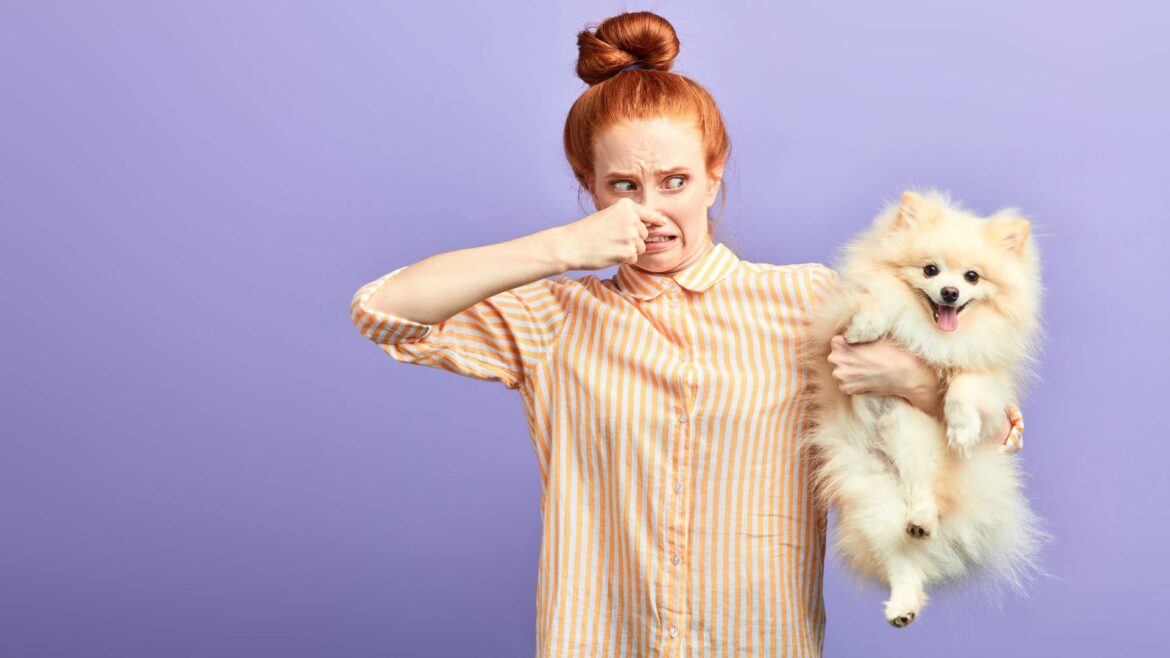
Between one bath and another, our four-legged hearts can develop that hint of “eau d’adventure” that they do not care about at all, but that to us humans is, how shall we say… not very… heavenly!
Put like this it sounds poetic but, without beating around the bush, at a certain point dogs can give off bad odor at various levels, some difficult to bear, and this becomes a problem, especially when we share spaces, sofas and super cuddles with them.
The excellent news is that the dog can be kept clean and perfumed between one bath and another, without necessarily having to use water and by adopting practical, safe and fast methods.
But be careful: perfuming the dog without first taking care of him in the right way is like spraying deodorant on a dirty T-shirt: the result will not be the best!
This is why in this guide we will first see the fundamental steps to prepare the fur, and then how to make it truly perfumed.
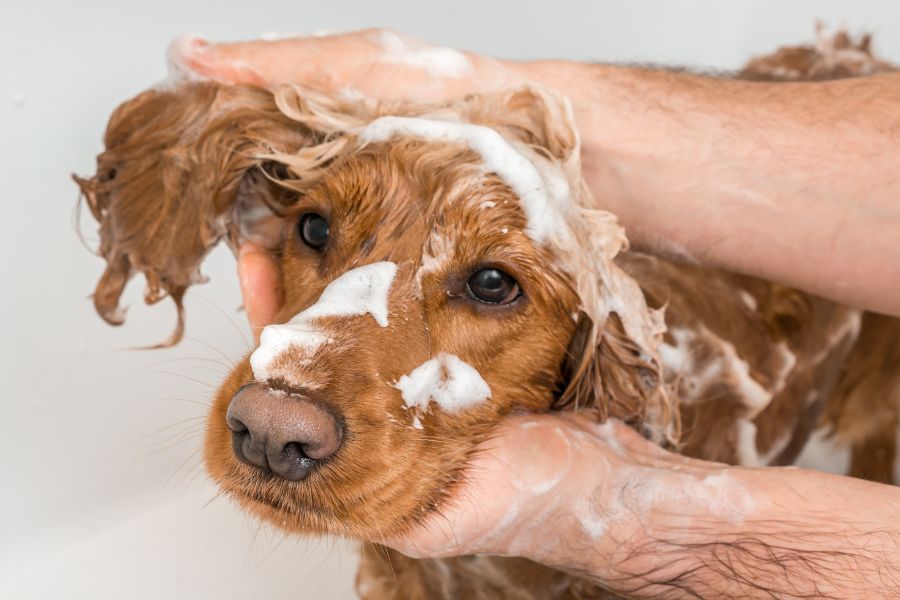
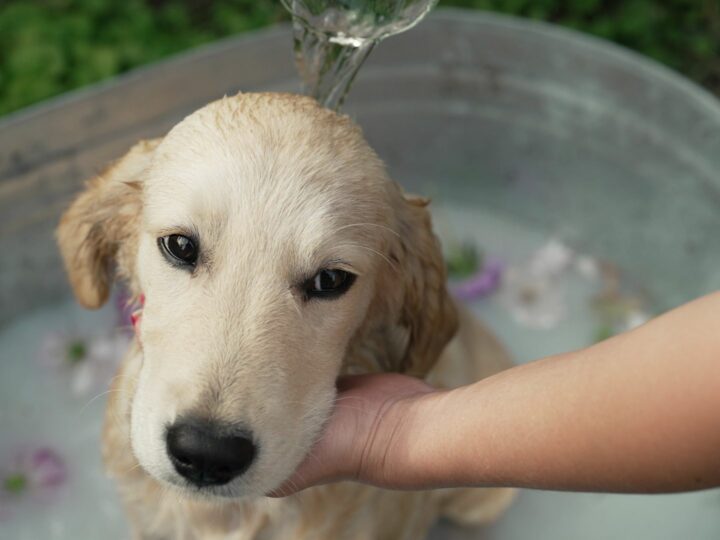
The first step for proper hygiene of the little heart is always the bath!
How often to wash the dog: finding the right balance
Before understanding how to perfume the dog, it is essential to underline that the first step for proper hygiene is the bath, which must be combined with good daily hygiene practices such as taking care of the fur, cleaning the natural folds of the skin that can be home to germs and bacteria, and the parts exposed and in contact with the ground and dirt.
Once all this is done, then we can have fun with deodorants and perfumes that make our little heart a “perfumed” cloud all to cuddle!
The question, in this case, comes naturally: how often should the dog be washed? This is an excellent question and there is no single answer because it depends on:
- The type of fur: if long, it may require more attention;
- Lifestyle: if the four-legged heart is a volcano who never backs down from puddles, holes and damp soil on which to roll and roll around… one extra bath is certainly appreciated!
- Climate: if it is very hot or if the little heart often gets wet in the rain, then a few extra baths may be needed.
One bath a week is excellent for maintaining the hygiene of the furry one and at home. Grooming, instead, can take place monthly, especially in cases of continuously growing fur.
With Yuup! products, formulated on the pH of Pets, baths can also take place frequently because they are delicate and based on natural ingredients of high quality.
Moreover, it is important to get the dog used to bathing at home from a young age, so for him it will become a normal moment and never a source of stress.
How to have an always perfumed dog: effective methods
Let us now see how to have an always perfumed dog thanks to effective methods that we can integrate into the daily hygiene routine.
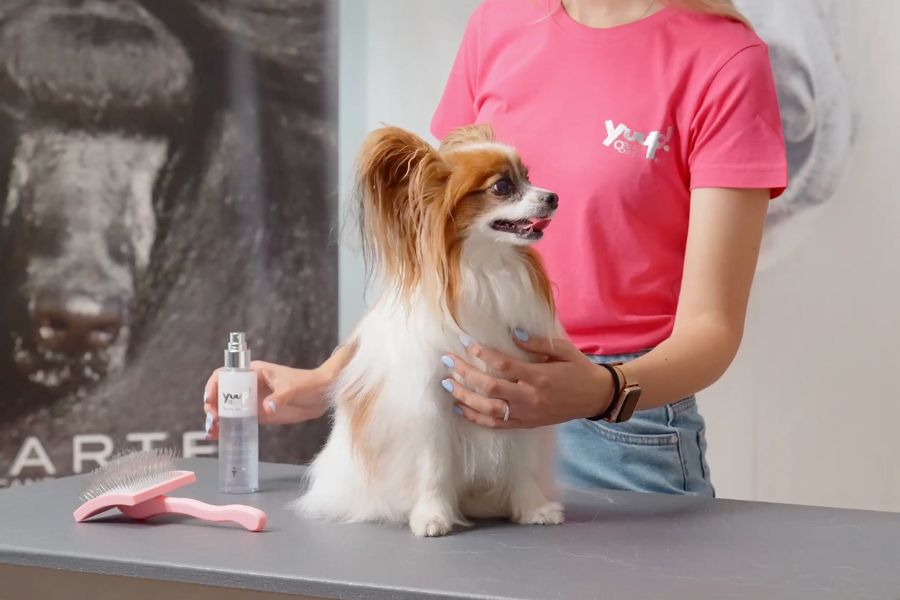
The mantra for having an always perfumed dog is… brushing!
Brushing: the first step for fresh fur
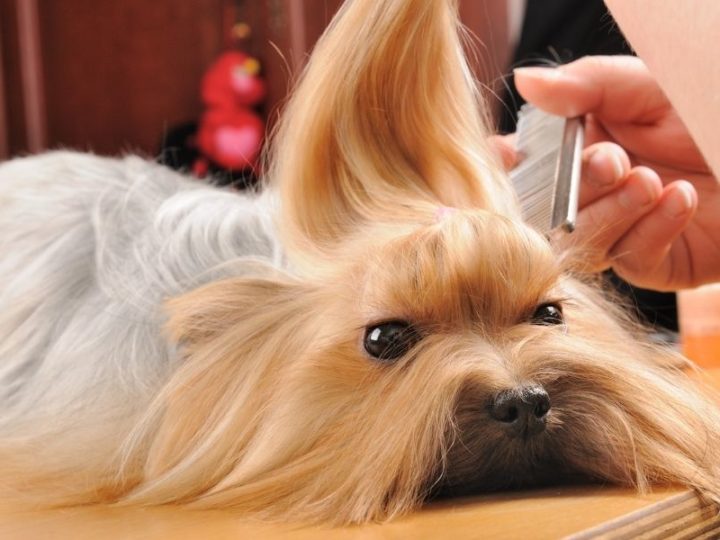
Whatever the type of fur, the mantra for having an always perfumed dog is brushing.
Good brushing, preferably daily and done with quality slicker brushes, brushes and combs, helps to:
- remove dirt, dust and fallen hairs;
- oxygenate the skin and promote cell renewal;
- strengthen the coat and keep it tidy, avoiding knots and mats, a fundamental matter especially in long-haired dogs.
Recommended frequency: it depends on the need of the fur, whether or not it tends to tangle; if instead it is managed well from puppyhood, brushing can take place 2/3 times a week.
If one is not used to management, instead, it is likely that daily brushing is needed. So it is an action that depends on the state of the fur.
Recommended tools:
- professional slicker brushes to detangle long coats;
- professional combs as tools for checking the fur;
- brushes for shorter coats.
Glossing and Detangling Spray with perfumed effect
For long-haired dogs, the Glossing and Detangling Spray is a real godsend, because it melts knots, prevents mats and tangles and leaves a sweet, long-lasting fragrance. It does not require rinsing and also makes daily brushing easier.
How to use it?
- Let us spray it on the fur;
- Let us comb and brush;
- Let us enjoy its silky and polishing effect!
Dry shampoo for dogs: the quick and practical solution
The bath is the bath, but when a lightning-fast wash is needed, the answer is Daily No Rinse Shampoo, a product that requires neither water nor rinsing (nor convincing the furry one to get under the shower or into the tub).
Dry shampoo has many good qualities:
- “clings” to dirt and takes it away using a cloth;
- eliminates bad odors;
- refreshes the coat and purifies it;
- is an ideal product for frequent use.
It is used:
- between one bath and another on the whole body;
- after a “wet” walk if it has rained or if the dog has been in wet places, on the little paws and intimate parts;
- when a boost of freshness is needed.
It is a ready-to-use product! To apply it:
- Take a quantity and apply it on a damp or dry cloth;
- Clean the affected area or the whole coat if it needs it and the game is done!
- No need to rinse or dry.
And when an impact action is needed, the Sanitizing Mousse with Chlorhexidine, Thyme and Lemon quickly reduces germs and bacteria, leaving the coat clean and purified.
Deodorants and perfumes for dogs
What is the difference between a deodorant and a perfume? Basically, the deodorant “removes,” meaning it reduces or eliminates bad odors, while the perfume “adds” fragrance without acting on the causes of bad odors.
Modern formulations of deodorants for dogs can certainly perform a double action: they neutralize or reduce bad odors and still leave skin and fur nicely perfumed.
Whatever the choice, it is in any case fundamental to use products for dogs that are:
- free from aggressive substances that can weaken the skin and dry the fur;
- absolutely free from substances such as Parabens, Phthalates, petroleum derivatives, SLS, SLES;
- alcohol-free, especially if the little heart is a little puppy or has delicate skin;
- formulated for dogs: never apply perfumes or deodorants for humans on furry ones, because they could create irritations and, in the worst cases, abrasions or dermatitis!
Now that we have dotted the i’s, let us consider that perfumes and deodorants certainly do not replace the bath or the use of dry shampoo or sanitizing cleansers. As for us humans, perfume can “patch things up,” but basically the periodic bath is needed.
These products can give that “perfumed” veil that makes furry ones even more adorable and here you can discover the whole collection of Yuup! deodorants and perfumes for dogs.
Wet wipes for dogs
Wet wipes for dogs are fantastic solutions, ready to use, comfortable and hygienic, because they are contained in single-dose sachets.
They are optimal for precise cleaning, because they can clean little paws, dirty areas or be used for a refresh in just a few gestures. When to use them?
- After the walk (or even during it if needed) if the dog gets dirty;
- To clean the little paws before the little heart enters the house, so as not to leave unwanted paw prints on the floor;
- Every time a lightning-fast cleaning is needed or the dog needs a little refresh to the coat.
Yuup! wipes combine shampoo and perfume in the practical 2-in-1 version, therefore particularly convenient and useful because they combine the cleaning and disinfecting action of dry shampoo with the perfuming action, which leaves the coat clean and perfumed for a long time.
Other useful methods for an always fresh and perfumed dog
Here are other methods that help limit bad odors in the dog and in the environments:
- Always air the dog bed and wash the little blankets regularly, especially if they are damp or wet;
- Change the towel with which we dried the little heart after he got rained on or took some little bath in nature;
- Pay attention to nutrition, always use foods of excellent quality and ask the veterinarian for advice on type, quantity and quality;
- Take care of ear hygiene which, as we have seen, are very delicate areas. We can use the specific lotion that cleans them, deodorizes and, thanks to Moringa Seeds, creates a film that prevents smog and dirt particles from settling.

Why does the dog give off a bad odor? The reasons can be many, but the good news is that there is a remedy for everything!
Why does the dog give off a bad odor?
Every dog has a unique and characteristic odor, determined by factors such as breed, hygiene, nutrition and state of health. His odoriferous glands, which are found especially on ears, paws and the perianal area, produce substances that, through licking and rubbing, spread over the whole body.
Some breeds, such as Dachshunds, Cocker Spaniels, Labradors, German Shepherds and Dobermanns, produce more sebum than normal. When sebum is abundant, it can oxidize, retain germs and bacteria and cause a persistent bad odor.
This excess can be of hereditary origin (primary seborrheic dermatitis) or caused by external factors such as incorrect nutrition or washes that are too aggressive (secondary form).
In these cases, the dog can have a stronger and more frequent odor and develop itching or skin problems, such as dermatitis. For these breeds it is therefore important to pay greater attention to hygiene and nutrition and, in case of doubts, always turn to the trusted veterinarian.
That said, in general the dog can give off a bad odor for different reasons. Here are the most frequent ones:
- Accumulation of dirt on skin and fur, a situation that can be solved with good periodic hygiene, but which requires attention if the dog has skin problems such as dermatitis or fungal and bacterial infections;
- Dirty ears. The ears are very delicate areas, because an accumulation of earwax can be created, foreign bodies can enter, the fur can tangle and accumulations of bacteria and dirt can form, giving off a bad odor. Moreover, little hearts can develop otitis, a condition that has foul-smelling secretions among its symptoms;
- Inflammations or obstructions of the anal area: it is the area most predisposed to being foul-smelling, especially if the anal glands become inflamed or obstructed. In the most serious cases, it is necessary to go to the veterinarian, who empties them manually;
- Sticky feces, incontinence or vaginal secretions in little females are other causes of bad odor in this area of the body;
- Oral hygiene problems: if the dog has inflammations, gingivitis or tartar, when he licks himself he can spread the bad odor over the whole body (as well as making kisses, let’s say, a little unpleasant…).
There are therefore natural causes and behaviors that contribute to generating or amplifying bad odor:
- The dog rolls on soil and grass: a gesture that makes him happy, but that causes dirt and bacteria to accumulate on the coat;
- The little heart bathes in the sea, lakes or rivers: it is a moment of great joy, but the water brings with it microbes and bacteria that settle on the fur, together with the classic wet dog smell;
- The dog puts his little muzzle into areas that are very “interesting” to him, such as garbage bags, corners of the garden and so on and so forth, so the unpleasant odor of those places also remains on the fur;
- The furry one lies down on carpets, dog beds or sofas that are not very clean, so dust and environmental odors go for a little ride on his coat.
All these natural behaviors of the dog can amplify the unpleasant odor. For this reason, hygiene is very important, both of the dog and of domestic environments and, in this sense, here you can explore how to eliminate dog smell in the house.
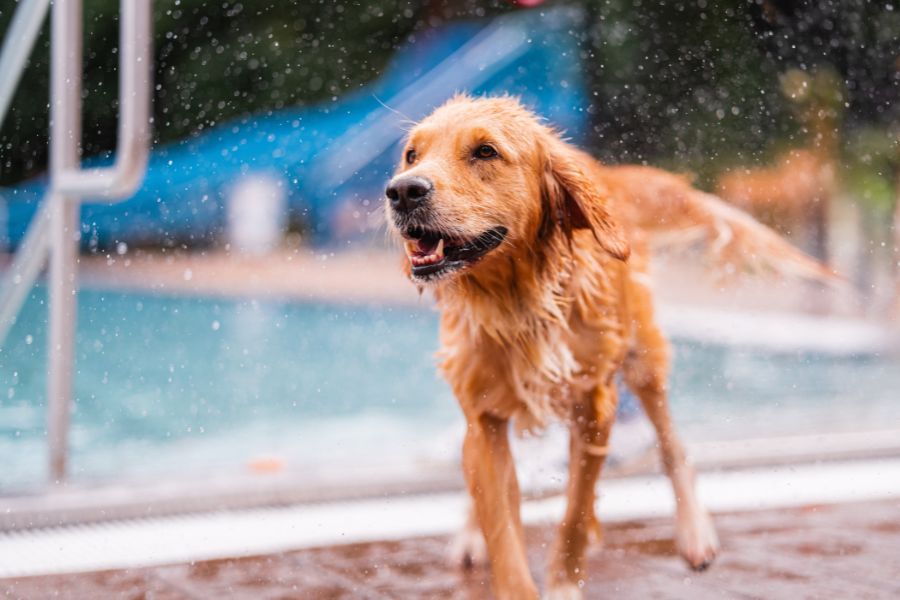
He is our love, but when the dog is wet, he can give off a truly terrible smell!
Wet dog smell: why does it intensify?
Wet dog smell is very unpleasant and persistent, but why is it so intense? And how to remove bad odor from the dog’s fur?
Microbes and yeasts live on the sebum that protects the dog’s skin and, when the skin gets wet, water breaks these molecules and the result is that the bad odor is released and amplified.

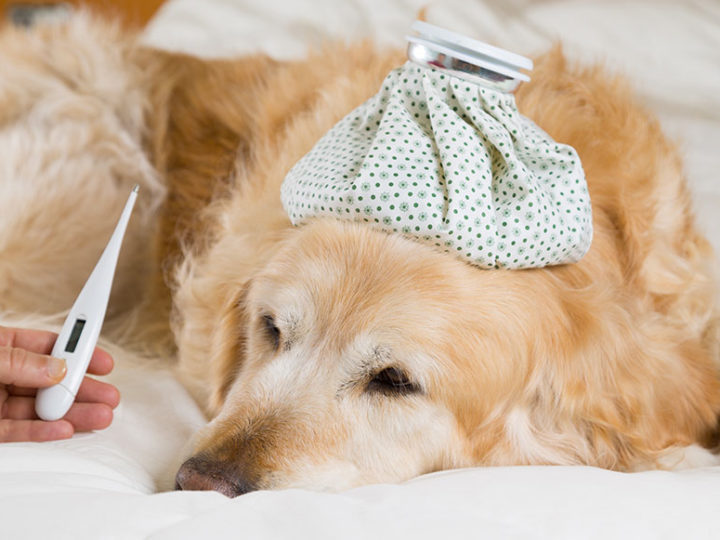
When the four-legged heart gets wet, it is very important to dry him immediately, to prevent the terrible wet dog smell from being released and him catching a bad flu.
If the dog gets wet, the remedy to eliminate the bad odor is a nice bath, but we can limit the damage:
- let us carefully dry the fur every time the dog gets wet;
- let us avoid the dog staying wet for a long time, especially in the cold seasons because it can put his health at risk and create colds or flu;
- if we cannot give him a bath, let us run for cover with practical solutions such as dry shampoo and wet wipes for dogs.
Natural perfumes for dogs: what to avoid
Many people wonder how to perfume the dog naturally.
“Natural” is a beautiful term, but it is not necessarily true that everything that is natural is good for our four-legged friends. The topic deserves to be explored further, especially in relation to some ingredients that may be poorly tolerated, if not even dangerous for our little hearts.
Vinegar: a popular belief claims that vinegar is excellent for cleaning and degreasing the dog’s coat, but it is absolutely wrong. Vinegar must never be used, even less so pure, because it is a very aggressive preparation. Of course, it boasts deodorizing and antimicrobial properties, but it is not good to use it on the dog because it could create irritations and abrasions of the skin;
Baking soda: another ingredient widely used in DIY anti-odor remedies, but using it on dogs is not a good idea, because we cannot know exactly the dilution suitable for the fur and skin.
Baking soda, vinegar, essential oils… all these natural remedies can be useful for eliminating dog smell in the house, as you can read in this article, but it is better not to use them on furry ones because we do not know the side effects they could trigger.
The point is that it is always better to rely on professional products, formulated to be safe and well tolerated by all dogs, even those with the most sensitive skin.
Where and how to apply perfume to the dog
Dog perfume is an excellent “beauty” product that should be applied when the furry one is already clean. The advice is not to understand it as a “bad odor remover” because it could worsen the situation!
But how to apply it best?
- Let us brush the fur to eliminate dust and surface dirt;
- Let us spray the product from a distance of at least 15-20 centimeters;
- Let us choose to apply it in areas such as the back and the sides;
- Let us always avoid eyes, little muzzle, mucous membranes and intimate parts.
How to eliminate bad odor from the dog’s mouth
Heavy breath is a deterrent to cuddles and kisses, but it can also indicate that the dog has poor oral hygiene or more important problems such as the ones we have listed in this article where we talk about cleaning the dog’s teeth.
As always, preventing is better than curing, so… how to perfume the dog’s breath?
- Let us use specific products such as spray toothpaste which, thanks to its liquid format, makes application easier
- Let us regularly check the furry one’s teeth; if plaque and tartar have accumulated in quantity, a dental scaling may be necessary. In this case, we recommend contacting the trusted veterinarian to understand how to proceed;
Let us have the dog examined by the veterinarian if the odor persists.
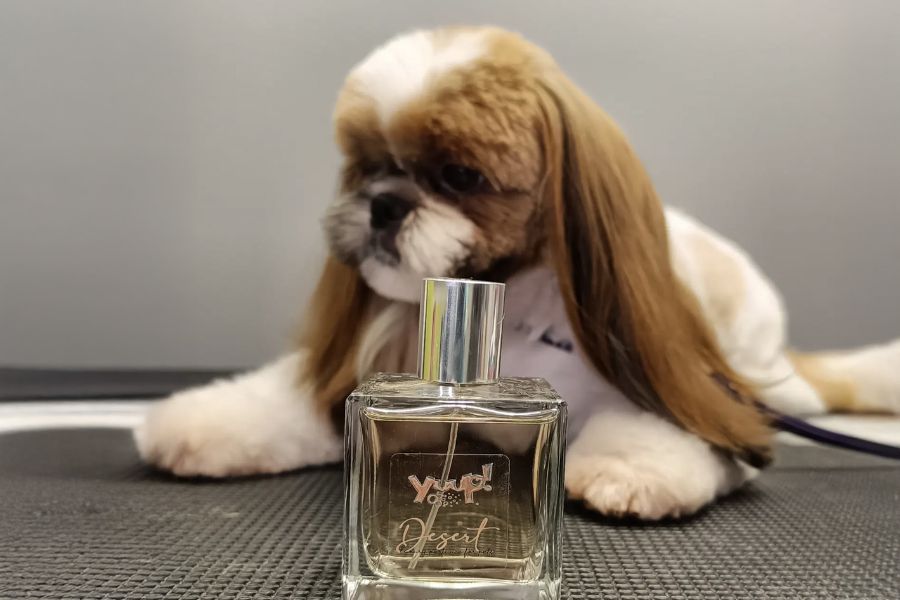
This beautiful furry one, cared for by our groomer Aleksandra Torc, enjoys the intense and spicy Desert perfume by Yuup!
Which perfume to use for dogs: how to choose the right fragrance
Once the bath has been done or the fur has been well brushed, we can apply dog perfume, but how do we choose the most suitable one?
The advice is to prefer:
- Perfumes that are alcohol-free and safe, especially on puppies who have very delicate skin;
- Products with delicate and non-invasive fragrances, which could bother the sense of smell;
- Solutions formulated in full respect of his pH.
Fragrances liked and disliked by dogs
How to perfume the dog’s fur without him or her being bothered by it?
Dogs’ sense of smell is very powerful and some fragrances could disturb them. This is the case with citrus scents that are too intense or plants with a fragrance that is too pungent, such as pure mint and eucalyptus.
For this reason, it is good for dog perfumes to be formulated with delicate fragrances that respect their sense of smell, even better if mixed together.
Yuup! perfumes are created with natural extracts and botanical ingredients of the highest quality and contain a synergy of ingredients that create original scents appreciated by little hearts.
Professional perfumes vs home perfumes
The perfumes of the Yuup! Home line are delicate fragrances, which have a limited duration because they are alcohol-free and can therefore be used frequently, even daily.
The perfumes of the Yuup! Professional line, instead, are more concentrated and long-lasting, because they also contain alcohol, like perfumes intended for humans. They are luxurious, refined and also intended for Pet Shops and professional groomers, although they can also be used at home.
These lines are truly designed for every need and give wonderful and original scents, such as those inspired by exotic locations like India, Cuba and Bali, or those inspired by the most famous desserts in the world, Sacher Cake, Macarons and Tiramisù, for a touch of sweetness that is unique to say the least!
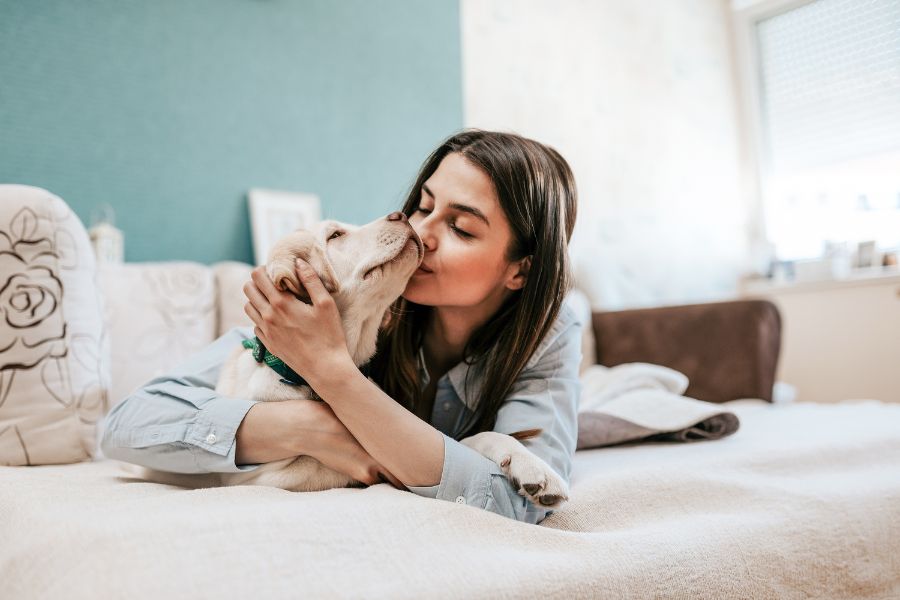
To have an always perfumed dog, we can follow effective and simple methods, so cuddles will be even more pleasant!
Conclusions: a perfumed dog is a happy dog
As seen, it is possible to keep the dog well clean and perfumed thanks to specific products.
Let us remember that the bath is hygiene point number one, but there are super allies such as dry shampoo and wipes that help keep the little heart clean and perfumed between one wash and another.
Moreover, deodorants and perfumes applied on well-brushed fur give pleasantly perfumed clouds to our furry ones and make the daily routine even more cuddly.
A clean and perfumed dog is a dog who is well and, surely, this also contributes to our happiness, because it makes closeness, little licks and kisses even more welcome!
Moreover, let us always consider that dogs live with us, in our home and come into contact with objects that we use every day such as beds, sofas and blankets. They are glued to us and to our children daily and it is right to respect the hygiene and well-being of both for a good, healthy and happy coexistence.