- Dogs in the mountains: to what altitude can a dog go?
- Mountain dogs
- Mixed-breed dogs and the mountains: love at first sight
- How to go to the mountains with the dog
- Where can I take the dog without a leash?
- What to do if the dog runs off in the mountains?
- Where is it forbidden to take the dog in the mountains?
- Tips for taking the dog to the mountains safely
- What to bring in the backpack in the mountains with the dog?
- In which season to go to the mountains with the dog?
- Let’s respect the mountains and people
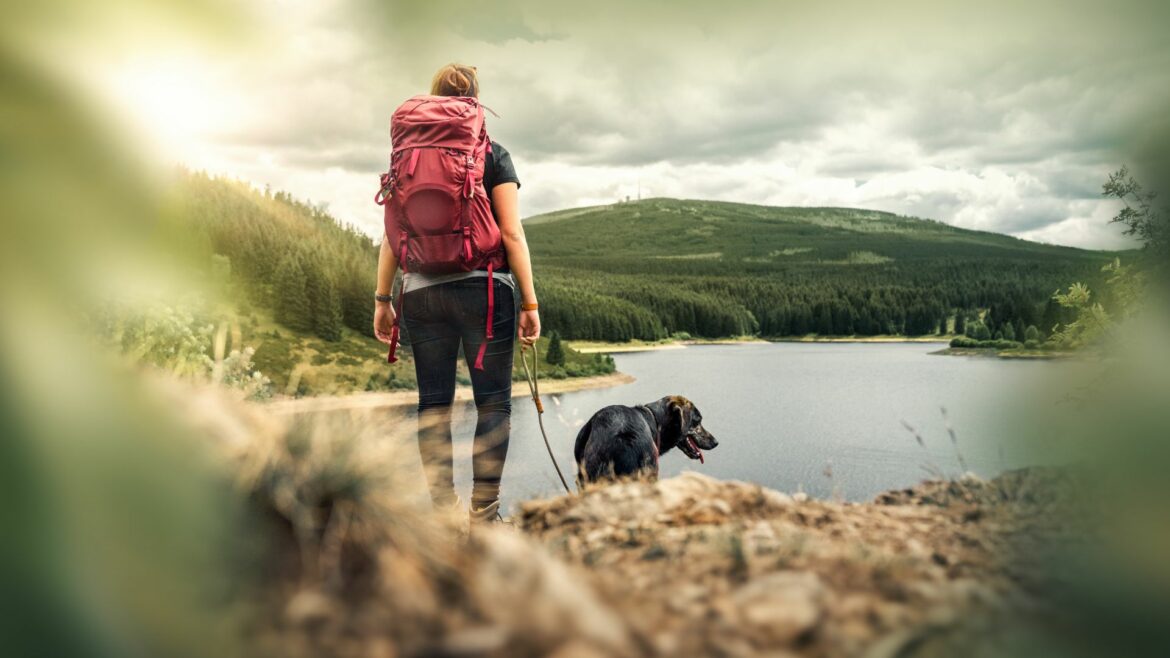
“A summit reached is the border edge between the finite and the immense.” This splendid phrase byErri De Luca contains one of thedeepest souls of the mountain: its ability tomake us change dimension.
Too often, in this world so frenetic,we lose contact with nature, but themountain is there,granting us to find it again every time we walk apath, we observethe irregular, yetperfect geometry of thepeaks, we lose ourgaze in thevalleys below.
Unforgettable moments, which become even more so if weshare themwith those we love, likeour dogs.
Yes, the mountain gives uniqueexperiences, but unfortunatelynot everyone respects andprotects its so fragilenature.
To remind us of the importance of safeguarding it there is theInternational Mountain Day, an anniversary established in 2003 by theUnited Nations General Assembly, which is celebrated on11 December every year.
For2024 the theme is“Mountain solutions for a sustainable future – innovation, adaptation, youth and beyond”.
On the occasion of this event, let’s therefore seehow to live and coexist with this nature so special, respecting it, protecting it and making our walks safe and comfortable for us and our little furry hearts.
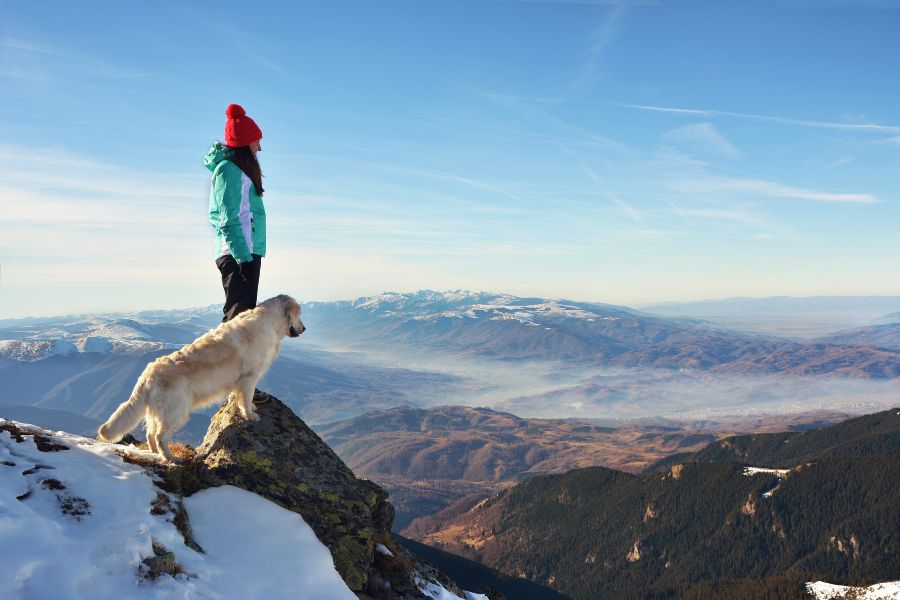
Freedom is going together where the earth meets the sky.
Dogs in the mountains: to what altitude can a dog go?
Before seeing what therules and tips are for taking dogs safely to the mountains, let’s introduce a very delicate aspect, the so-called “altitude sickness”.
Everything starts from the idea thatnobody can improvise as a climber, especially if they are not a person with at least a minimum of training or with physical problems that prevent experiencing the mountains safely.
Thisdoes not mean giving up; rather, it is essential tochoose the route suited to one’s possibilities andphysical characteristics. Therisk, in fact, is to run intoinjuries or into “altitude sickness”, whenoxygen is lacking and you have “hunger” for air.
This condition can occurfrom 1,500 to 2,500 meters (and beyond), altitudes where theair is morerarefied and it manifests withexhaustion,difficulty breathing, evennausea ordizziness in more serious cases.
Altitude sickness can also affect our little four-legged hearts, especially if they have cardiac or respiratory problems, so itis very important to pay attention to this aspect if we want to go up in altitude.
As a rule, let’s say thatthe threshold to consider when we go to the mountains with dogs isfrom 1,500 and up, so let’s make sure our little furry one is in shape if we want to reach higher altitudes.
Moreover,we always go up calmly, never hurrying the pace, and wepay a lot of attention if we take cable cars or gondolas with our dog, because these means canreach high altitudes in ashort time.
Now, a question might come spontaneously, namely:why do some dogs live right at such high altitudes? And others love snow to madness and can’t wait to romp among the snow-covered meadows?
The answer to the first question is thatthere are little hearts (or ratherbig hearts because their size is notable 🙂) thatwere born in the mountains, come from mountainous territories and therefore have physical characteristics for which the high peaks are their ideal environment.
The answer to the second question we explored in depth inan article entirely dedicated to the special bond between dogs and snow, whichyou can find at this link.
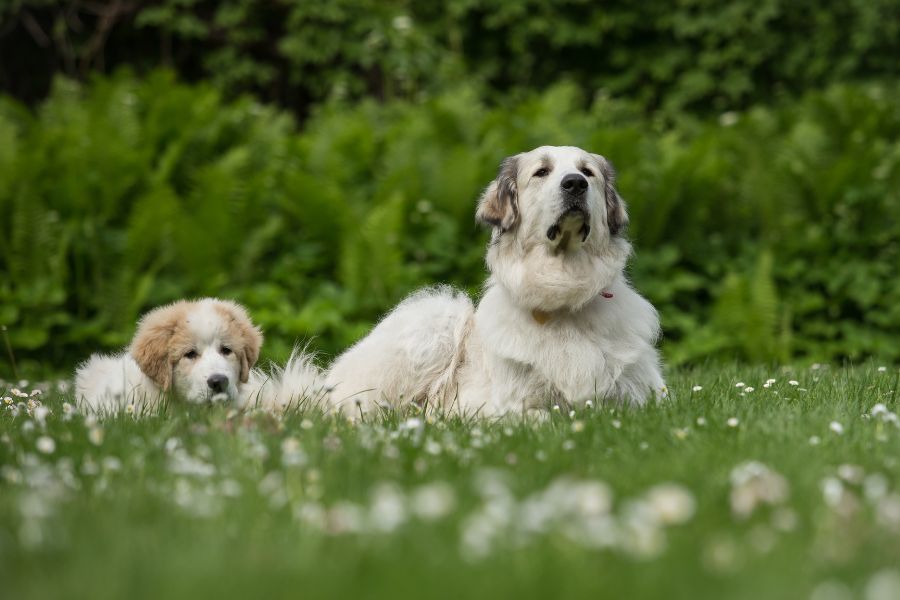
“Who goes there? Watch out, we’re the guardians of the mountains!”
Mountain dogs
Mountain dogs arelarge-sized specimens and equipped withthick,dense coats, suitable to protect them during the winter period, because we all know how much the mercury column can drop during the cold seasons.
Moreover, they havesmall ears, to avoid frostbite, and often the jaw is powerful.
Before seeing which mountain dogs there are, it is good to make a clarification, to have an“official” measure: we are talking about thespecimens actually defined as such by the FCI (Fédération Cynologique Internationale), but we know that Shepherd Dogs are also dogs that live in the mountains.
Let’s think, for example, of the Maremma Shepherds or the Abruzzo Shepherds, which are certainly mountain dogs, but which the FCI has, precisely, placed in the group of Shepherd and Cattle Dogs.
Mountain dogs are predominantlydogs with the function of “guardians” of the flock, custodians who watch over and protect the livestock and the territory. We might notice them while they seem “relaxed” observing long green stretches and the flock grazing, but in reality they are doing their job.
If we should meet one during a trip in the mountains, let’s remember tobe respectful andnot disturb them, also because among their “duties” there is precisely also that of defending against possible threats. These arespecimens used to a context different from the urban one and they couldmisinterpret our desire to approach to make friends.
Let’s therefore see which mountain dogs are according to the FCI.
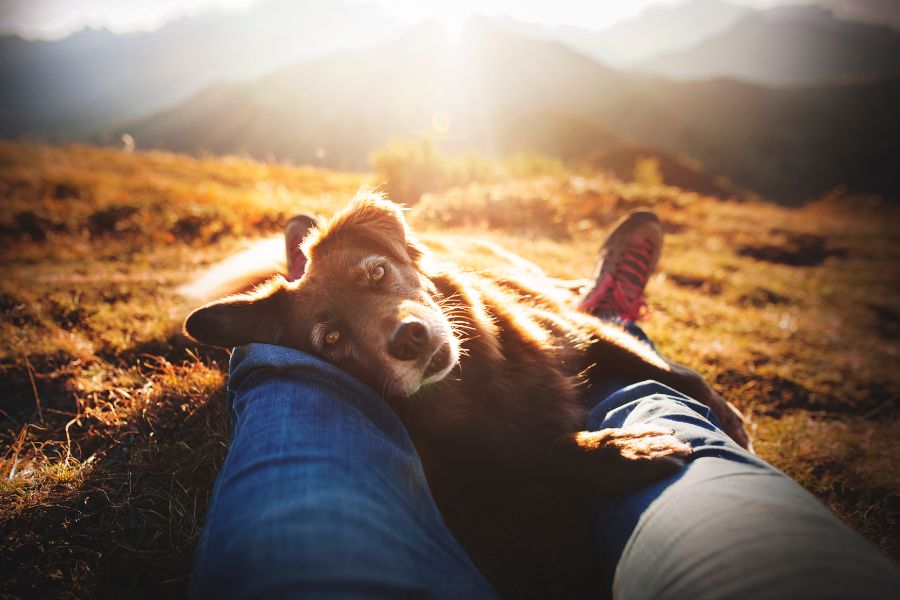
Every adventure is more beautiful with you by my side.
Mixed-breed dogs and the mountains: love at first sight
There is mountain and mountain: there are peaks that reach impressive heights and there are gentler mountains. There are flat plateaus and steep paths, and these are natural conditions that must always be considered when we go to the mountains with dogs.
Of course, as we have seen,some breeds are more suited to a life a few steps from the sky, but when we talk aboutdogs in the mountains we cannotforget to includethem,mixed-breeds, with their load ofvitality, theboundless desire to discover new things and theinstinct to stay with us andaccompany us in our adventures.
Every mixed-breed has different characteristics, but manylove walking in nature and discovering new places,sniffing everything and more and enjoying the cool in the warmer seasons.
As happens for every breed, it is important tounderstand what the characteristics (physical and character) of our little furry one are andbehave accordingly when we choose to visit the mountains, opting forroutes that areaccessible for them too.
How many km a day can a dog do?
Theideal daily walking time for a dog istwo and a half hours, divided intoseveral moments of the day.
It is difficult to establish a minimum and a maximum number of kilometres that a dog can do, because a lot depends on his physical characteristics, but we can say that,on average, it isnot recommended to exceed 10 kilometres a day.
When we go to the mountains with dogs, however,time and kilometres are “concentrated” and moreoveruphill, so the advice is tocalibrate carefully the duration and length of the walk.
Moreover, we always try todefine a sustainable itinerary for us and for the little furry ones, also according to the currentseason and thestate of health of the little four-legged heart.
The mountains must be a pleasant experience to share with our four-legged hearts, remembering special moments spent together, therefore it is good to respect the needs of both.
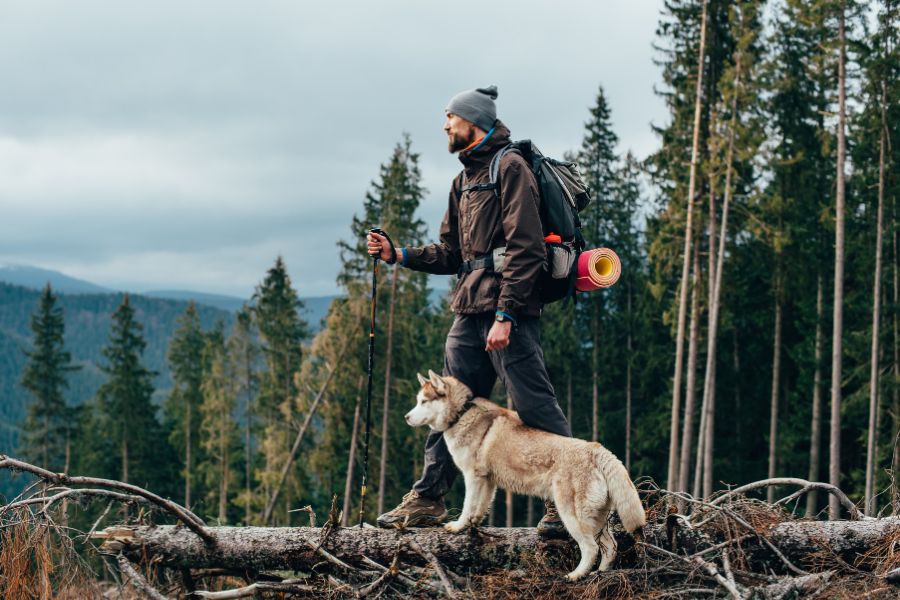
In the mountains we are never alone: let’s protect ourselves, the furry ones, and the magic of the nature around us.
How to go to the mountains with the dog
Here are sometips to go and conquer meadows and woods in a safe way, regardless of the little furry one who will be at our side.
It is important to consider that inItaly there are provisions andregulations of the veterinary police that must berespected tosafeguard thelittle hearts andpeople from contractingdiseases, in particularRabies, theterrible pathology that we explored in depth in this article.
These are, in detail:
- TheVeterinary Police Regulation of 1954, Presidential Decree of 8/2/1954 no. 320 (here is the text in the Official Gazette), which, to fight Rabies, requires the mayors of the municipalities to establish theobligation of a muzzle when dogs are not on a leash in the streets, in places open to the public, in premises and on public means of transport. The regulation also defineswhen the little furry ones may not wear a muzzle or be kept on a leash (guard dogs within private limits, shepherd and hunting dogs when they actually carry out these “jobs”, armed forces dogs when they are on duty).
- TheOrdinance of the Ministry of Health of 6 August 2013 (here is the text in the Official Gazette), which specifies thebehaviour to keep regarding the leash, namely:“Always use the leash with a length not exceeding 1.50 metres while handling the animal in urban areas and in places open to the public, except for dog areas identified by the municipalities”. The ordinance also defines that you must always carry a muzzle with you and requires entrusting the dog to people who are always able to manage him correctly.
Regional laws and municipal provisions can in any case make changes to these ordinances and regulations.
Where can I take the dog without a leash?
The presence of Ordinances and Regulations can make us think we must keep our little heart on a leash for the whole walk in the mountains, but it is not like that.
We have seen thatwe must use the leash, and possibly the muzzle, when we go to public places and urban areas.
For example, apublic place in themountains where it is mandatory to use the leash and the muzzle is thecable car.
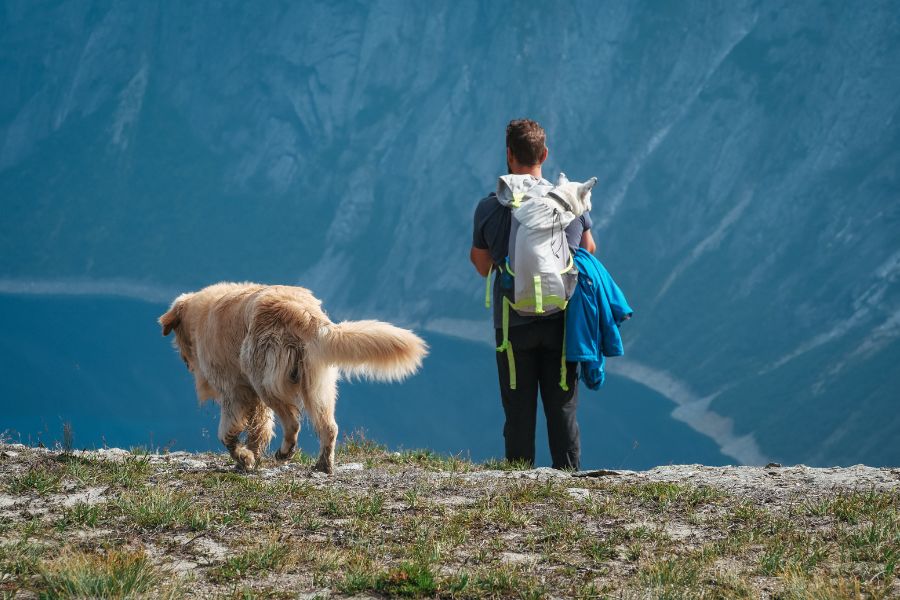
Adventure yes, risk never: let’s remember that the mountains are a treasure to respect and preserve.
How much is the fine for a dog without a leash?
Let’s take again for a moment the Ordinance from a few lines above according to which there is the obligation to“always use the leash with a length not exceeding 1.50 metres during the handling of the animal in urban areas and in places open to the public, except for dog areas identified by the municipalities”.
Therefore,except for these dedicated municipal areas, except for the open countryside andour beloved woods,we must always keep the little furry hearts on a leash, under penalty of a fine that can be very steep.
In Italy there are very varied local rules on this topic, but we can define arange that goes from 50 euros to 300 euros.
Very different is thediscussion linked to any damage to other animals or people that the little furry one can cause in the mountains, as in any other place. Also in this case there will be afine, but the situation can end up in thecriminal sphere.
Ifthe damage concerns other people’s things or animals,compensation is stilldue andit is not a criminal offence, but if there isdamage to people, then we speak ofnegligent personal injuries, with the more serious scenario being negligent homicide,very serious crimes and they can lead to a decidedly heavy claim for compensation.
Let’s remember that this isindependent of whether the little heart is or is not kept on a leash, becausethe pet mate is always responsible for his conduct and for thedamage caused by his dog, unless the event had a so-called “unpredictable and unavoidable” cause.
Also in this case, however, it means dealing withlawsuits and possiblytrials that canrequire time,energy and a significantexpenditure of money.
Rules to respect in protected areas
Let’s therefore remember that,when we let the dog off leash,we must always be careful, especially if the paths are crowded, to avoid that he runs off or causes damage to other animals or to the environment.
Let’s also remember thatregulations are always continuouslyevolving and, to avoid making mistakes,before leaving for the trip to the mountains let’s take a look at the rules of any parks or sites we are going to visit.
Basically,in natural parks it is not allowed to enter with the little furry ones in what is calledArea A, the integral reserve, because that is where there is the highest concentration of fauna and flora, often protected.
InArea B, the general oriented reserve, inC and inD, theleash obligation is insteadprovided.
A further piece of advice to be sure we are on the “right road”: atmeeting points, inparking areas from where the paths usually start, and inrest areas there are almost alwayssigns that explain which behaviour to adopt with the little furry ones, solet’s take a couple of minutes and read them carefully, so we will be sure to adopt the right behaviour when we walk through woods and paths.
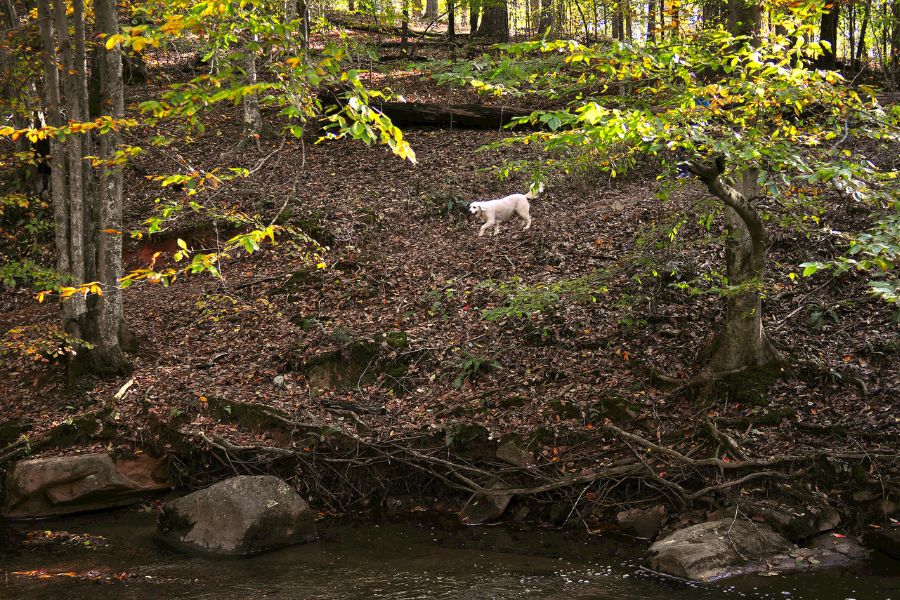
What is this little rascal doing all alone in the woods? If he runs off in the mountains, let’s activate the recall right away!
What to do if the dog runs off in the mountains?
We know that themountains arefull ofstimuli for the little furry ones, from thesmells ofother animals that can activate their instinct to “know more”, toirresistible bushes todive into, reckless of danger, up toclose encounters (hopefully not of the third kind 😅) with otherhumans and otherlittle furry ones who are enjoying their walk.
After all,the dog still remains a predator, so themountains are a sort ofolfactory paradise, very rich in stimuli that can lead him off course.
Naturally the little furry ones know what is best for them at every moment, but it is also true that that “something” can have the appearance of a hare that is taking a little stroll in the woods…
If our little heart wants to chase it, then we must take cover andactivate the recall.
The recall can become moreeffective depending onhow we pronounce it, how weset our body, and on someways to reinforce it. It is always a good rule to get the dog used to the recall andrely on a professional trainer, especially if the dog has particular behavioural characteristics (tends not to listen or to run away).
And, we add, this becomesparticularly important in the case of dogs in the mountains, because if we want to enjoy high-altitude walks with our little furry one, we must do it safely for him or her, for others, for ourselves and for everything that lives among the mountains.
Let’s also remember thatreward orpunishment must happen in the moment immediately after the little heart does something good or less good.
Let’s also remember thatthe recall is an exercise that must be built and consolidated over time, and that it is based ontrust.
Let’s explain better: when we go to recall the dog we are asking him to give up pursuing an action or a desire, in favour of continuing something together with us.
It is important that this request is followed by apositive reinforcement, like a nice “good job”, acuddle, agame. What we want tospark in the thought of our little furry one is “If my human asks me to follow him, I give up this interesting thing to do one that will certainly be just as interesting. And I will do it because I trust him.”
That is why,if the little furry one runs off into the woods, it is useless to scold him as soon as he comes back.
In this case,if he runs off and we have our heart in our throat or we are angry, we count to ten, take a nice breath andtry to keep an affectionate behaviour, because the dog must always know thatwhen he comes back to us it is a moment of joy and celebration, to underline that coming back to us is the right thing to do.
Theopposite isharmful because, if wescold him, the next timea hare passes in front of him he will gochasing it and, when he hears that we are calling him, hewill pretend nothing, because he will already know that a telling-off is waiting for him, so… it is worth continuing with the famous “hare hunt in the woods”, an activity notoriously loved by dogs all over the world.
Finally,if we know that the little heart tends to run away, it is better to use along line or at least keep it in the backpack among the things to bring with the dog to the mountains.
Maybe that day our little heart is particularly effervescent, then we can keep him on the leash even while we are walking. Sure, it will be less fun, but it is always good to put on the scales fun and safety, for him as for every creature that lives in the woods.
Where is it forbidden to take the dog in the mountains?
There areareas in Italy where it is not possible to walk with our little furry ones.
This choice was made toprotect thepeculiarity of theterritories andthe safety ofdogs andwild animals such as wolves and bears, but also ibexes and marmots.
These are some sites such as theNational Park of Abruzzo,Lazio andMolise, theGran Paradiso National Park or theStelvio National Park, where, in some areas, it is not possible to walk with dogs.
In these placesthere are,however,accessible areas, for this reason the advice, as seen, is toalways check carefully where it is possible to go with the little furry heart before organizing a mountain hike.
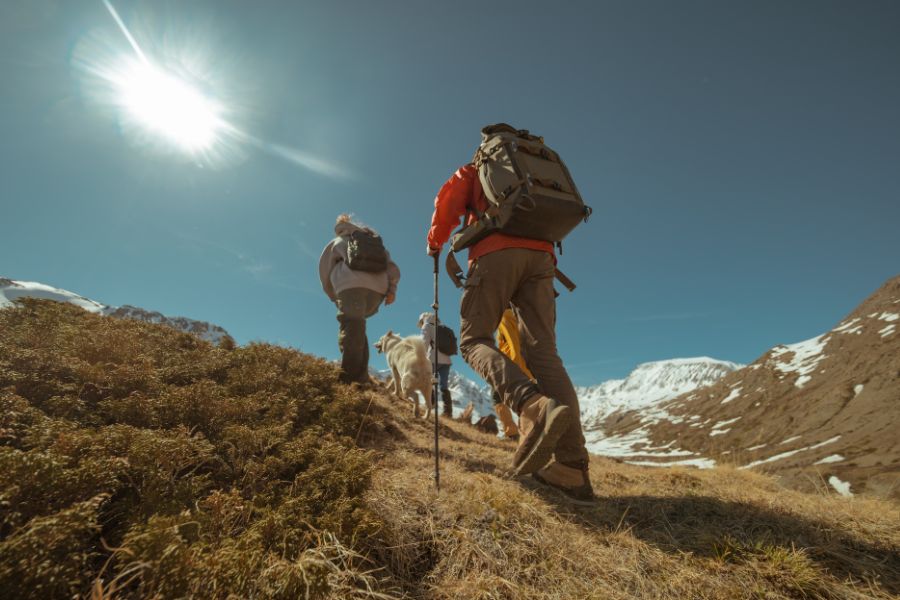
Paws safe: in the mountains let’s remember to bring everything needed for a safe and pleasant walk.
Tips for taking the dog to the mountains safely
Let’s summarize what we have seen so far with thesetips for taking the dog to the mountains safely:
- Check that the little heart is at the top of his form before organizing the walk;
- Choose an accessible route that is calibrated based on the dog’s physical characteristics, so as not to tire him or put him in difficulty;
- Carefully check which routes are forbidden and which are accessible to dogs;
- Avoid very high altitudes (from 1,500 upwards, especially if the dog is not used to it);
- Let the little heart off the leash only if we know he responds to recall; if instead he has a particularly “hunter” instinct, rather use a long line;
- Follow the marked trails, never go off route, especially if you do not know the area!
- Use antiparasitics, as a good rule also in the dog’s everyday urban life.
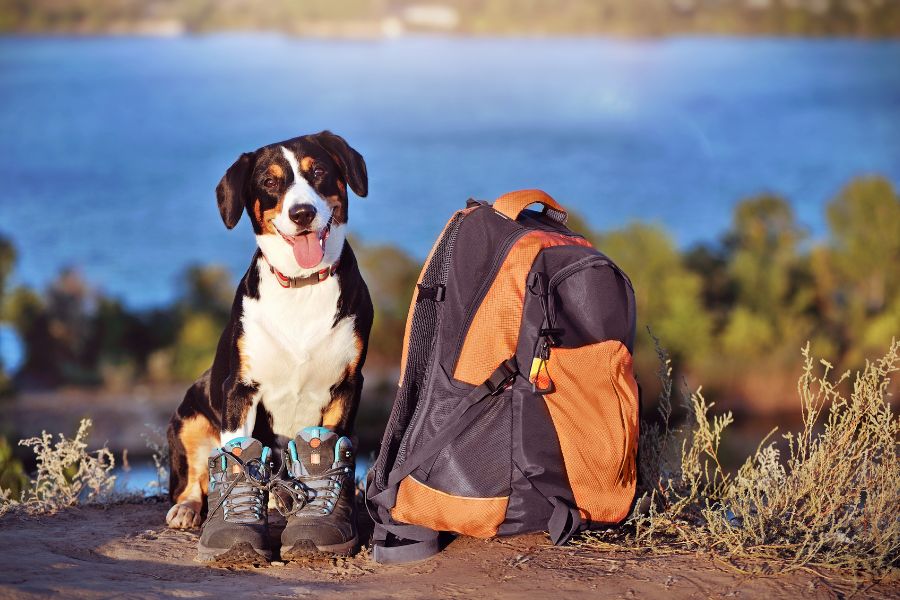
My plan for today? A super walk in the middle of nature… but are we sure we have everything we need?
What to bring in the backpack in the mountains with the dog?
Here is alist of things to bring with us when we go to the mountains with the dog:
- Water and food necessary to ensure a comfortable walk;
- Leash (possibly thelong line) and themuzzle and thelittle bags to pick up the droppings;
- Anemergency kit and at least asheet or alittle blanket (with the mountains you don’t joke, especially if we choose demanding routes);
- Natural antiparasitic products to protect him from insects and annoying parasites and a good protective balm for the paw pads for the little paws;
In which season to go to the mountains with the dog?
Themountains are anenchantment in every period of the year, but if we go with ourlittle furry one it is essential tomake sure that for him it is the right season.
-
- Spring: great for everyone, becausetemperatures aremild during the day. The important thing is to payattention to the temperature swings in the morning and in the evening;
- Summer: avoid the hottest days and pay extreme attention thatthe little furry ones do not drink from icy streams when they are overheated and that theyalways have their water available, fundamental as hydration against heat strokes;
- Autumn: great for everyone but, as in spring,attention to temperature changes and do not lose sight of the little furry one that runs around free… It is a moment to confuse him with the wonderful colours of the seasonal foliage 🤭;
- Winter: in this case it is necessary tocarefully consider the characteristics of the dog, because in the mountains it can be very, very cold. If needed, make sure tocover him with thelittle coat.
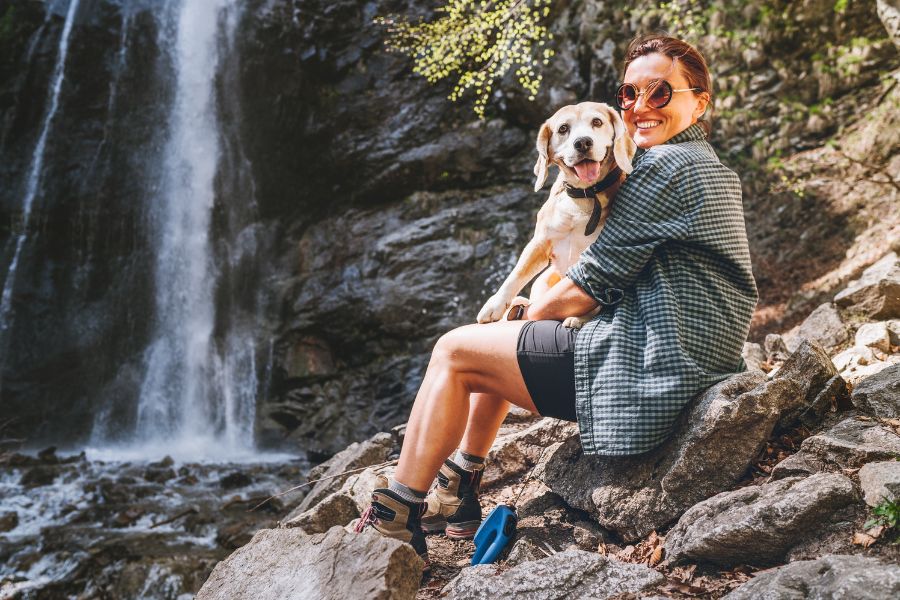
Between trails, woods and waterfalls our steps become one. Our friendship knows no boundaries.
Let’s respect the mountains and people
In recent years, the mountains have become a very popular destination also for less experienced people and, too often, unfortunately, we read about events that not only put people’s lives at risk but also the mountain ecosystem itself.
The mountains belong to everyone, and it isessential to respect them,leaving no traces of our passage and avoiding picking flowers, moving branches or stones, because even the tiniest little pebble has its fundamental role within the mountain ecosystem.
Especially in high season, when thetrails arecrowded, we must thereforepay attention to the behaviour of our little furry one and try tomanage as best as possible the encounter with people and other “climbing dogs”.
In this way we will be able tolive wonderful experiences, where the little furry hearts will have the time of their lives and will regain contact with an uncontaminated, free and wild nature.
A phrase attributed to the visionary poetWilliam Blake says that“When men and mountains meet great things happen”: let’s make sure that these great things aremagical experiences for us and ourfour-legged friends, always respectingthe enchantment andfragility of themountains that watch us beyond all time from above.
Article written with the consultancy of Chiara Festelli, Dog Educator.