- Do dogs suffer from the cold?
- Dog breeds that suffer from the cold
- At what temperature do dogs get cold?
- How to understand if the dog is cold
- How to protect the dog from the cold: practical solutions
- Do dogs feel cold if they sleep outside?
- Watch out for little ice balls on the fur!
- Cold shock in dogs: symptoms and remedies
- Cold nose in dogs: is it a problem?
- Cold paws in dogs
- Cold ears in dogs
- Cold tail in dogs
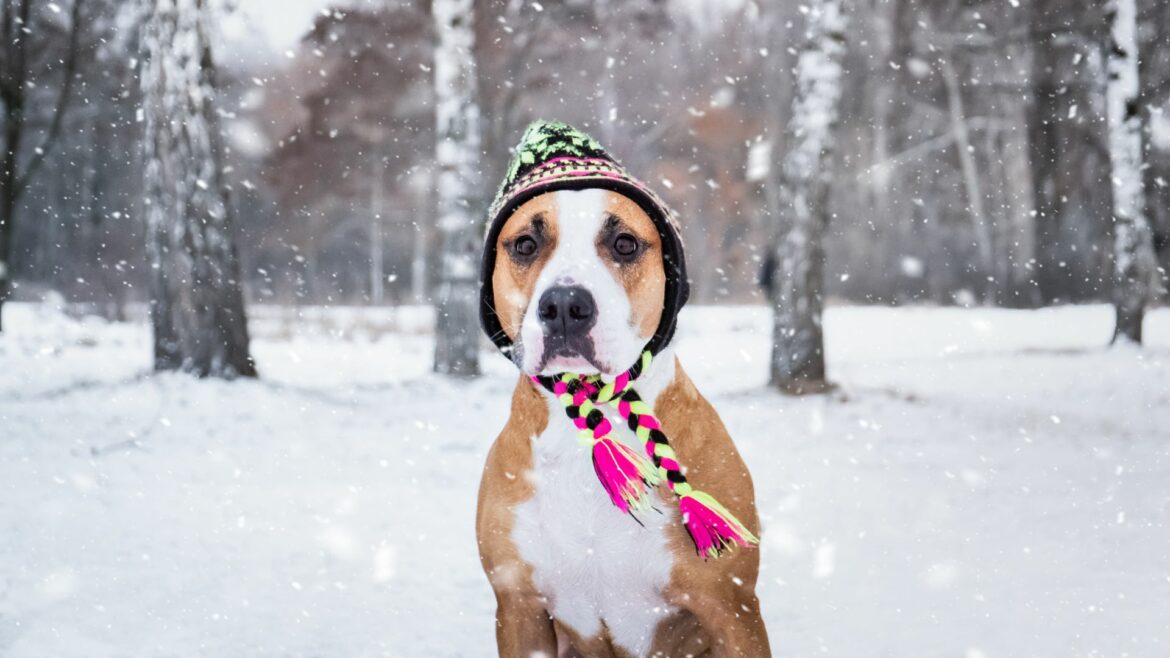
Temperatures dropping, shorter days, rain and wind, up to the arrival of the candid snow: when autumn and winter peek out dogs too can suffer from the cold.
But does it happen to all little furry ones? Are there dogs that suffer more from the cold than others? And how to protect them, especially at night and when they are outdoors?
The perception of cold varies from breed to breed, but it is fundamental to recognize the signals of any discomfort and adopt the right precautions to protect dogs from problems and ailments that could put their health at risk.
Do dogs suffer from the cold?
Yes, dogs feel the cold, but the way they perceive it and the mechanisms with which they face it are different from those of humans.
This is because, first of all, dogs have fur and, some breeds, as we explained in this article, also the undercoat, which acts as natural insulation. Secondly, little darlings regulate temperature with breathing and disperse heat through the skin and the little paws.
Naturally, dog breeds with a thick coat and undercoat tend to tolerate the cold better, while little furry ones with a smooth or short coat, especially if without undercoat, are more vulnerable to low temperatures.
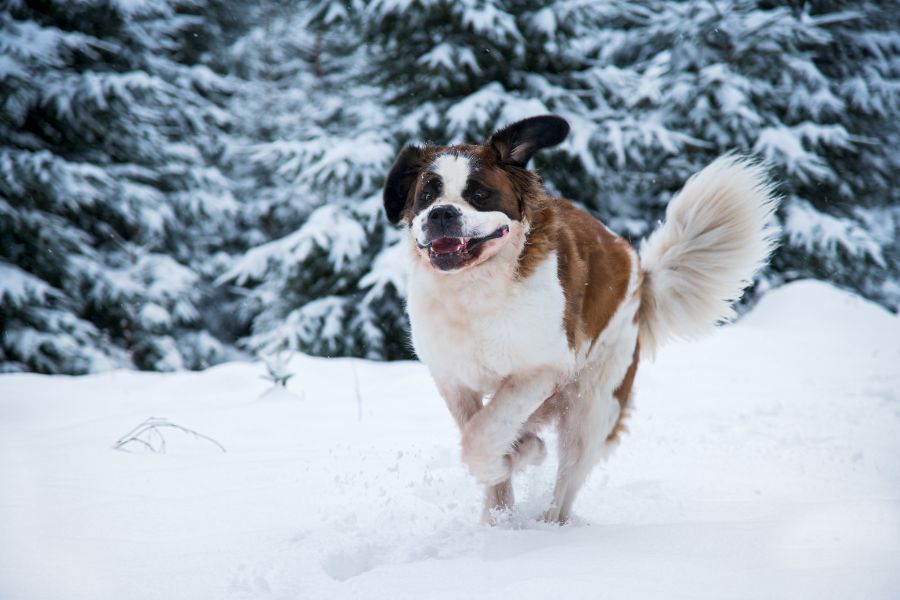
Do dogs suffer from the cold? Some breeds certainly less than others, because they are equipped with a thick coat and undercoat.
Dog breeds that suffer from the cold
Which dog breeds suffer the cold more? Let’s consider that resistance to low temperatures depends on factors such as physical build, size and, as seen, the amount of fur they have.
This leads us to consider that puppies and senior dogs can suffer the cold more, the former because the skin is sensitive and puppy fur is generally much softer, finer and sometimes sparser compared to adult fur. Seniors, instead, because they can be more fragile and therefore more vulnerable, since the coat over time tends to thin out and the fur to become thinner.
Basically, small-sized and short-haired dog breeds such as for example Chihuahuas or Dachshunds tend to suffer the cold more, while breeds with a thick coat and undercoat such as Huskies, Maremma Shepherds or Saint Bernards are much more suited to withstand low temperatures.
In general, all “northern” dogs have physical characteristics that lead them to tolerate the cold better, even the most intense.
Let’s think, for example, of Huskies that guide sleds in the icy plains of Lapland, or Saint Bernards that work as rescue dogs in the mountains: these immense furry hearts are equipped with a thick coat and undercoat that shelters them, but they also have a greater fat mass, a factor that makes them less vulnerable to cold and frost.

If the dog is cold it is very important to take him to a warm and dry place and immediately measure the temperature to understand whether he has a fever or not.
At what temperature do dogs get cold?
It is natural to ask ourselves at what temperature dogs feel cold and we can estimate it to be between 7° and 10°.
The threshold is however personal, and a lot depends, as we have seen, on factors such as the coat, age and also lifestyle. Yes, because a dog that spends a lot of time outdoors can develop greater resistance compared to a little darling who spends most of the day at home.
Besides heat stroke in the summer season, it is good to also pay attention to cold shock in the winter season and, if you think that your dog may have gotten cold, here you find an article on how to take the dog’s temperature.

Aaaaah it really feels good nice and warm under the little blanket…
How to understand if the dog is cold
The question then comes naturally: how to understand if the dog is cold? There are some rather common symptoms, some physical and others behavioral, that help us understand if the dog is suffering from the cold: recognizing them is essential for his well-being and his health!
The physical symptoms are rather similar to human ones: let’s think of the saying “I’m trembling from the cold,” because this is exactly what happens to us too, and the little heart shows the discomfort in these ways:
- He trembles: this is an unmistakable sign that he is suffering from the cold. Basically, it is a natural mechanism by which the body tries to generate heat and which manifests itself with trembling and chills;
- He has muscle stiffness and slowed movements: the cold tends to stiffen the joints. In some cases, breathing may become short and the heartbeat may accelerate, especially in the case of a strong temperature change;
- He does not want to go out for a walk or continue it. Can we understand it as energy saving? In a certain sense yes, because the dog needs warmth and accompanies this behavior by curling up or crouching down, with the aim of retaining as much of his body heat as possible;
- He is less active than usual: being sleepier or, conversely, becoming whiny and restless, because in this way he is trying to attract our attention and communicate to us the discomfort he is feeling.

To protect the dog from the cold, it is important that he has a warm and comfortable dog bed available.
How to protect the dog from the cold: practical solutions
To protect the dog from the cold, we can put in place a series of actions and fundamental habits to avoid seasonal illnesses and prevent cold shocks.
The first good habit to prevent the dog from suffering from the cold lies in taking care of his nutrition with a balanced diet, made of high-quality products and calibrated to his physical characteristics.
But when it is cold, does the dog have to eat more? We let the trusted veterinarian answer this question, who knows the dog’s breed and characteristics and to whom it is better to ask for an opinion on this precise aspect.
Because not all dogs are the same, what is right for ours may not be right for another furry one.
Speaking of habits, however, the walk factor comes into play, the moment of the day when the dog can feel colder, especially if he is used to spending many hours indoors.
It is good practice to go for a walk during the warmer hours, especially in the middle of winter, thus avoiding the coldest hours of early morning and evening, when the temperature can drop dramatically.
Moreover, at these times of the day there may also be ice on the road and this can be potentially dangerous for the little heart and also for us! Therefore, let us prefer, if possible, the warmer hours of the day.
And if it rains or even snows, when we come back let us carefully dry the furry one, focusing especially on the area of the paws and the little belly.
Other ways to keep the cold at bay can be useful accessories such as:
- Coats or sweaters: there are many types on the market and they are a valid help to protect the dog’s body from the cold, but also from bad weather such as wind, rain or snow;
- Protective balms: the paw pads can be protected by spreading Paw Balm before the walk, which protects from ice, cold and the salt that is usually spread on the road to prevent ice from settling. Let us always remember: the dog’s little paws, as for us humans, are at the extremities of the body, and consequently the first to feel bad weather, and the first to be protected;
- Warm and well-insulated dog beds and blankets: we have several times recommended carving out a space for the dog that is “his,” with the dog bed placed in a quiet area of the house where there is no continuous passage of people. It is important that the dog bed is made of breathable fabrics, preferably cotton, but in winter it can be made warmer with the addition of little blankets.
Do dogs feel cold if they sleep outside?
If dogs sleep outside, they can suffer from the cold significantly, especially on winter nights. As we were saying, much depends on the breed, but if the little hearts remain exposed to the cold for many hours, they can risk a nice cold and/or, in the worst case, a bad cold shock.
It is preferable, therefore, to let the furry one sleep with us at home and, should it really not be possible to do so, let us try to make the outdoor dog bed warmer and safer. Here are some practical tips:
- Let us raise the dog bed as much as possible from the ground: the ground, especially in winter, can be very cold if not frozen;
- Let us position the dog bed in a place far from drafts and avoid putting it in open areas, where the cold is felt more. Let us choose a protected, safe place and as sheltered as possible from bad weather;
- Let us equip the dog bed with elements that allow the little heart to stay warm. Let us use materials that guarantee good insulation, especially on the roof, which should be rainproof! In this article we have written all the tips to build a perfect dog bed!
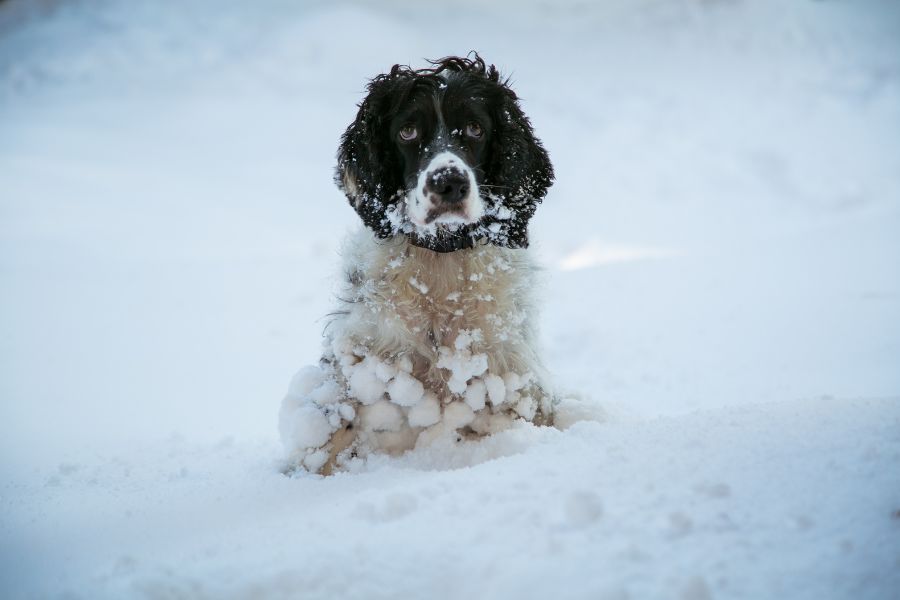
Little ice balls are very dangerous because they lower the temperature and can freeze the little belly!
Watch out for little ice balls on the fur!
Snow is wonderful and many little hearts adore it, but when it snows, you need to pay attention to the so-called “little ice balls” that can form on the coat if it comes into contact with the snow.
If the dog has long fur, in fact, little ice balls can form on the fur, which can lower the body temperature and even freeze the little belly.
The same can happen if the dog has long fur under the little paws and between the paw pads: if it freezes, the dog may feel discomfort or pain when walking.
If this happens, it is important to act immediately, therefore take the little heart to a warm place and melt the ice, perhaps with the help of a towel.
How to prevent this from happening? If this winter you intend to take a lovely trip to the snow and your dog has long fur on his little paws, it is better to shorten it.
And, in general, to avoid little ice balls on the fur, it is ideal to apply in advance a detangling product such as Glossing and Detangling Spray, which creates a natural barrier, so the snow slides away and does not freeze on the fur.
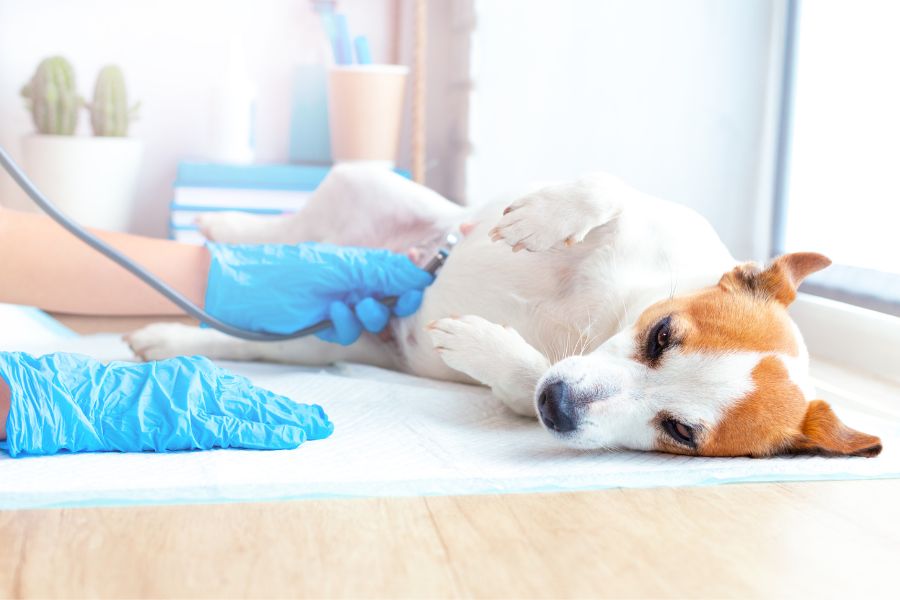
If we suspect that the dog has caught a cold shock, we must call the veterinarian immediately and follow his or her instructions.
Cold shock in dogs: symptoms and remedies
Cold shock in dogs is a serious condition and requires immediate intervention to avert dangers to his health.
We have seen that when the dog suffers from the cold, he can show it with different symptoms and behaviors:
- Trembling;
- Tiredness;
- Restlessness.
If the little heart instead shows more serious symptoms such as:
- He trembles incessantly;
- He keeps his tail between his legs;
- He has a cough;
- He has vomiting;
- He has dilated pupils;
- Coat and skin are cold to the touch;
- The gums are pale;
- He has motor and respiratory problems.
In these cases, he may have caught a cold shock and we must intervene immediately!
Let us also consider that the dog’s temperature varies from 38° to 39.2° and, if it drops below 37°, we can speak of mild hypothermia, while if it is even lower, we speak of severe hypothermia.
This state is extremely dangerous and can lead to
- shock;
- lack of oxygen flow;
- kidney failure;
- other serious problems that must be immediately averted.
Let us call the veterinarian immediately to understand which interventions to activate to relieve the dog’s discomfort, because in this case it may truly be a matter of saving his life.

If the little heart’s nose, ears and paws are colder than usual, let us pay attention and bring him inside immediately, to a warm and dry place.
Cold nose in dogs: is it a problem?
The nose is a great indicator of dogs’ health and, when it is cold and wet, it is normal, because this small part of his body acts as a regulator of body temperature. However, a cold nose in dogs should be monitored if it is accompanied by other symptoms such as trembling, apathy or coat and skin that are very cold to the touch, because these are symptoms that the little heart is suffering from the cold.
Cold paws in dogs
In dogs, the little paws are a critical point of heat loss, which is why when temperatures are harsh, blood flow to the limbs is reduced and the paws can become cold, especially in small-sized dogs, senior little hearts and puppies.
However, if cold paws in dogs are accompanied by the symptoms we have described so far, especially joint problems or limping, this may suggest that the dog is suffering from the cold and, in the worst case, that he is in hypothermia.
Cold ears in dogs
The ears are also a vulnerable point: if they become stiff or too cold, the dog may not be able to warm himself properly. Let us consider that, also in puppies and small-sized dogs, the ears tend to cool down more quickly. As seen for the nose and paws, if the dog has cold ears and shows other typical symptoms, it means that he is suffering and we must act to bring his body temperature back to the normal state.
Cold tail in dogs
A cold tail can also be a sign that the dog is losing heat.
Let us carefully observe our little heart, try to understand if he presents other symptoms like the ones described that may suggest that he is suffering from the cold and, if the answer is positive, let us act immediately and call the veterinarian to understand how to behave.
In rarer cases, a cold tail in dogs can be a symptom of circulatory problems, especially due to strong temperature changes. In this case we speak of “cold tail,” cold tail, a problem that can manifest itself when the furry one goes from warm to very cold temperatures, for example if the dog bathes in cold water, perhaps in a stream or a little lake.
In this case, usually the tail is 2°-3° degrees colder than the rest of the body, it is stiff and sore and the dog tends to pull away if we try to touch it. Also in this case, it is important to call the veterinarian immediately and ask for advice on how to behave.
In this article we have seen whether dogs feel cold and when they can come to suffer from it, what are the dangers to avert and how to protect the little hearts so that they can count on warm and comfortable environments.
The watchword is always to protect their well-being and, if you want to explore this topic further, we invite you to read this article that tells how dogs and cats too can catch a cold and also other seasonal illnesses.