- What is Pet Therapy: the meaning
- Types of Pet Therapy recognized in Italy
- Benefits of Pet Therapy: the reasons why it works
- Pet Therapy: contexts of application
- Which animals are used for Pet Therapy?
- Pet Therapy dogs
- Recognized Pet Therapy courses
- How to get your dog to do Pet Therapy: all the requirements
- How to do Pet Therapy with your dog?
- Where does a Pet Therapist work?
- Yoga Pet Therapy: why it was banned
- Pet Therapy cases in Italy
Today we want to take you on a journey that goes off the usual routes and delves deep into a topic that is too often trivialized and oversimplified: Pet Therapy.
First of all, we want to thank a person of great humanity: Lorenzo Fois, who, with his expertise and kindness, supported us in understanding this very special topic as best as possible. Lorenzo works with dogs in every respect, as a dog trainer, handler, and head of Pet Therapy interventions “For a Smile Onlus” in the hospitals of Bassano – Schio – Verona, and he enriched this article with his comments to raise awareness and highlight the importance of the subject.
A thank you, of course, also goes to his students, including Gloria De Rossi, whom we interviewed and who told us about her journey, giving us a wealth of valuable information for writing this article.
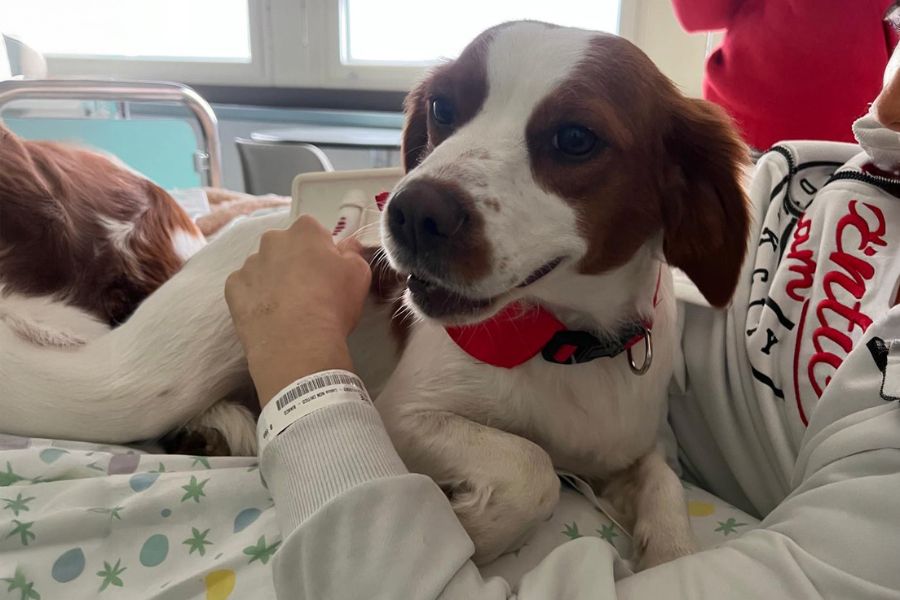
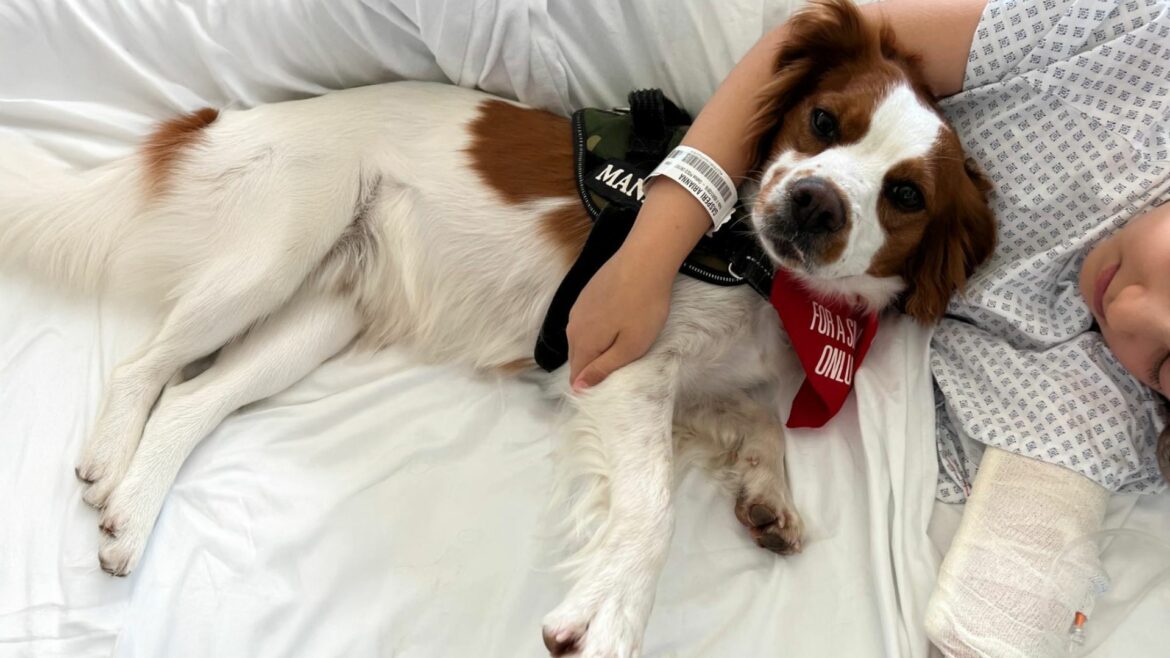
A Pet Therapy dog among the hospital corridors: but how can you resist this little face?
What is Pet Therapy: the meaning
Literally, Pet Therapy is “therapy with domestic animals”, but that is not enough for us, on the contrary.
When we talk about therapies, we need to take a small further step to understand their meaning, practical application and the benefits for the health of those involved.
Many people, in fact, think that it is enough to pet a kitten, play with a dog, take a walk in nature with a little donkey or spend time poolside with dolphins doing flips to have health benefits.
Can we define all this as Pet Therapy?
The answer is no, and we are faced with one of the first misunderstandings on the topic, because all this is certainly pleasant, but it is not enough to activate a therapeutic action, that is, of “study and concrete implementation of the means and methods to fight diseases” (as per the definition of the Treccani encyclopedia).
In essence, Pet Therapy alone cannot be considered a therapy, because it offers results only if it works in synergy with an actual therapy designed by professional figures. For this reason, it is correct to call it co-therapy.
This explains the effective and fundamental role of Pet Therapy, giving it back the authority and the scientific dignity it deserves.
Its objective, in fact, is to draw benefits from the relationship between people and animals, welcoming the ongoing therapy and starting from the objectives already set, to define others that can be helpful to the patient.
In this view, therefore, the mere presence of a little furry one is not enough to help people improve their physical, mental and emotional health: trained operators are needed, through recognized and authoritative courses, who carry out Pet Therapy in cooperation with the reference medical teams.
That is why the correct term to use is IAA: Animal-Assisted Interventions, a complete wording, as it includes activities, education and therapy studied and applied to support the therapies already defined by doctors.
Types of Pet Therapy recognized in Italy
IAA, Animal-Assisted Interventions, are divided into:
- Animal-Assisted Therapy (AAT): therapeutic support for people with physical or mental disorders;
- Animal-Assisted Education (AAE): improvement of cognitive and social skills;
- Animal-Assisted Activities (AAA): recreational and playful interventions to promote well-being.
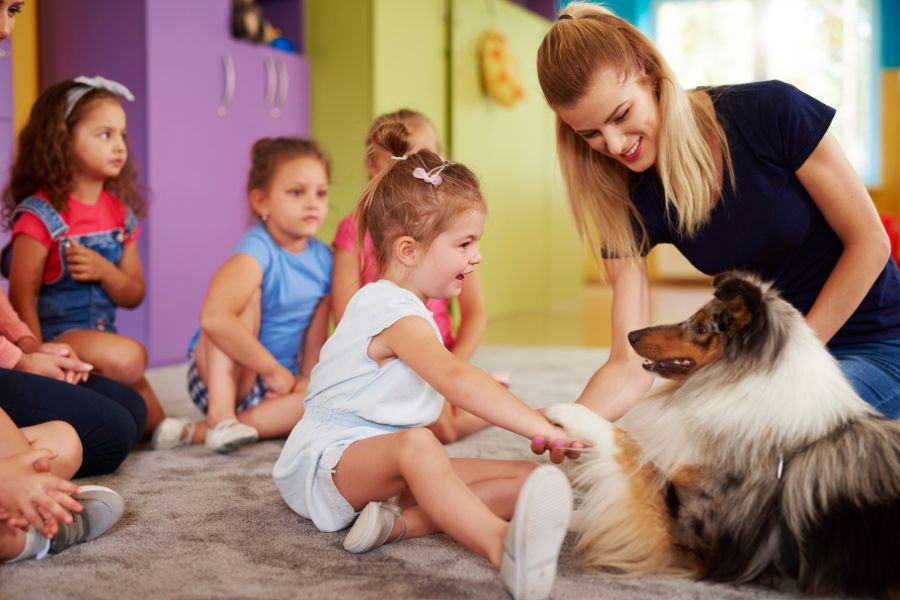
Children, with an operator and a Pet Therapy dog, play in the hospital. One smile at a time, Pet Therapy helps heal wounds, even the invisible ones.
Benefits of Pet Therapy: the reasons why it works
Now that we have clarified our ideas on a topic as misunderstood as Pet Therapy, it is good to explore another very important scientific concept to understand the raison d’être of this co-therapy: biophilia.
What makes Pet Therapy beneficial? Why is it applied so frequently and widely in hospitals and healthcare facilities all over the world?
The answer lies in a word coined in 1984 by the American biologist Edward O. Olson: “biophilia”.
According to Olson, human beings have a bond with nature so deep that it is imprinted in their genes. This bond was created over the course of evolution and leads to an innate tendency to focus interest on life and vital processes.
With their joy, exuberance and authenticity, animals are the very emblem of life; for this reason Pet Therapy is today considered a co-therapy that supports people who are going through difficult times, helping them face them and overcome them.
In particular, contact with animals increases the level of neurotransmitters and of what are defined as the “happiness hormones”, such as oxytocin, endorphins and dopamine.
This makes it possible to activate an instant sense of well-being, calm, relaxation, which reduces stress and activates positive moods such as serenity, happiness and joy, which, when cultivated, can evolve into greater confidence in one’s abilities and in the future in general.
Let’s think for a moment about the immense well-being we feel if we are lucky enough to be able to work with our pet next to us (we talked about it in this article dedicated to the dog in the office): isn’t it perhaps an extraordinary natural source of happiness and immediate well-being?
And what about the joy that a walk with our four-legged little hearts instills in us? The benefits of walks with dogs are many: a simple activity that strengthens the bond with our four-legged friend and brings well-being to body and mind.
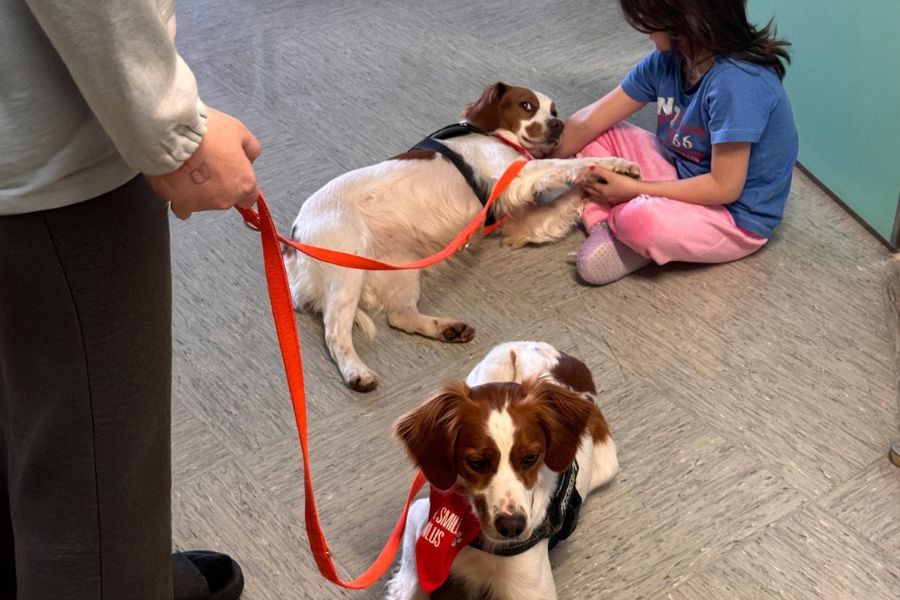
Two Pet Therapy dogs in a hospital ward: play, movement, interaction, animal-assisted interventions are a mine of well-being for patients.
Pet Therapy: contexts of application
This form of co-therapy is used in the contexts of:
- Hospitals and nursing homes: to relieve loneliness and stress;
- Schools: for children with disabilities or learning difficulties;
- Rehabilitation: to stimulate patients’ motor and relational skills.
Pet Therapy is also used successfully to support the improvement of people affected by conditions or disorders for which, unfortunately, complete recovery is not expected, such as ADHD (Attention Deficit/Hyperactivity Disorder), ODD (Oppositional Defiant Disorder), CD (Conduct Disorder) and disabilities of different kinds.
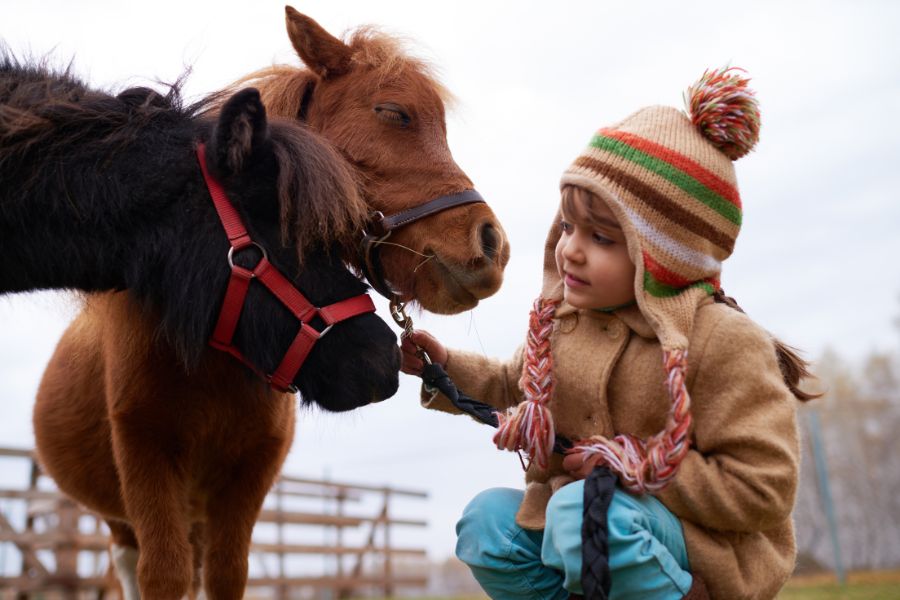
A little girl pets a pony during a Pet Therapy session: connections that help heal body and mind.
Which animals are used for Pet Therapy?
“The choice of animals should be oriented toward animal varieties and subjects which, due to physiological and behavioural characteristics, are compatible with the objectives of the project. The cooperating animal must be certified as being in a good psycho-physical and functional state of health.” This is Article 6 of the Modena Charter, a document that sets out values and principles on the relationship (here the full version published on the website of the Italian Institute of Bioethics).
Among the animals most involved in co-therapy are horses, cats, dolphins, donkeys, dwarf rabbits and above all them, our beloved dogs, who manage to establish deep and empathetic communication with people. We talked about this in more depth in the article dedicated to the friendship between humans and dogs.
The little furry ones communicate through the main senses, hearing, sight and smell and above all sight is a form of information exchange that people perceive and understand easily.
Conversely, dogs are able to understand both people’s verbal and non-verbal language, therefore these extraordinary characteristics make them particularly precious in Animal-Assisted Interventions. But which four-legged little hearts are most suitable for Pet Therapy?
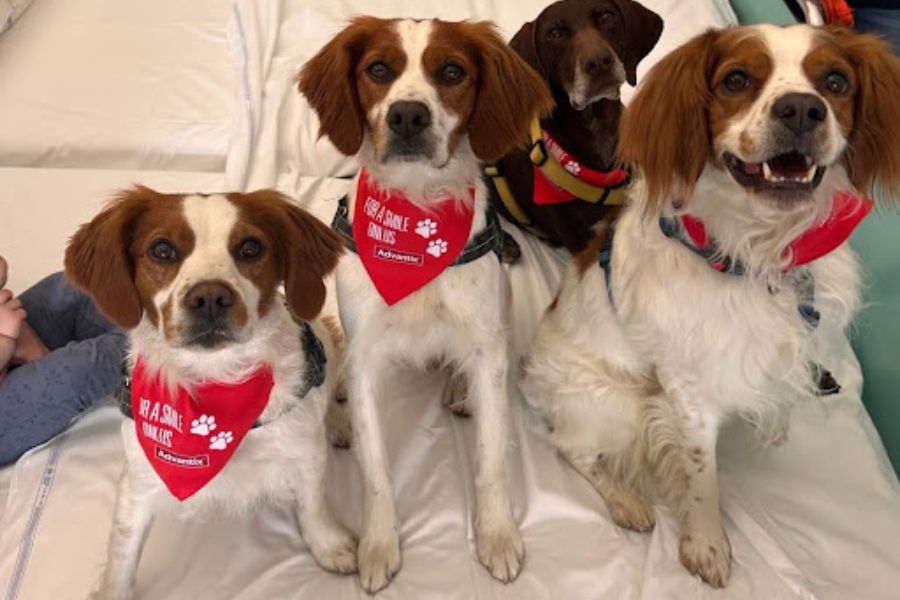
Ready for the group photo? Here are some of the little furry hearts starring in the Animal-Assisted Interventions of the For a Smile Onlus, which works with Pet Therapy in Italian hospitals!
Pet Therapy dogs
Basically, there are no breeds that are suitable regardless; rather, there are characteristics that make a dog suitable for Pet Therapy activity.
These are intelligence, sensitivity, and the ability to adapt to different situations. Added to this is the need for dogs to be well trained and used to living in contact with people.
The breeds that most frequently show these characteristics are the sweet and intelligent Labradors and Golden Retrievers, the sensitive Mountain Cattle Dogs, the adorable Shih Tzus, and our great mixed-breed friends.
Be careful though: DNA matters, but only up to a point, because the dog involved in the Animal-Assisted Intervention project must receive specific training for the interventions he may take part in.
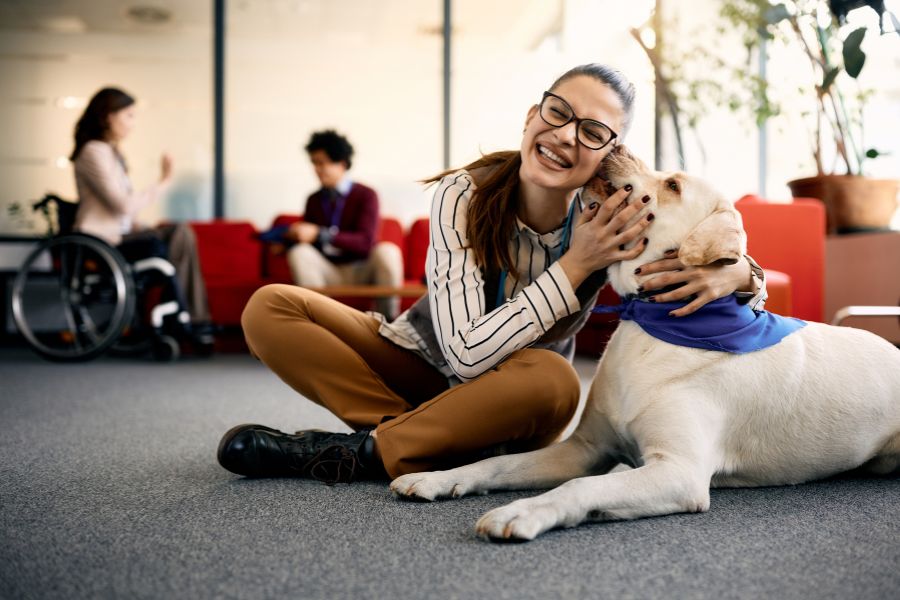
A Pet Therapy operator hugs a dog in a clinic. Pet Therapy training involves rigorous steps, in order to work professionally in Animal-Assisted Interventions.
Recognized Pet Therapy courses
In 2009, the Italian Ministry of Health established at the Istituto Zooprofilattico Sperimentale delle Venezie the National Reference Centre for Animal-Assisted Interventions.
The Institute and its related website are to be considered the reference point regarding Pet Therapy in Italy, as it deals with:
- promoting the standardization of operational protocols for health control and the behaviour of animals involved in AAI;
- strengthening collaborations between medical and veterinary facilities;
- improving knowledge on the applicability of interventions for patients (people with autism or mental disability, children and the elderly);
- collecting data and disseminating it;
- organizing and managing training pathways.
This last point is of particular interest to us today, since on the Institute’s website there is a page dedicated precisely to the training pathways provided for in chapter 9 of the national guidelines for Animal-Assisted Interventions (should you wish to explore the topic in order to undertake the pathway, here you can find the complete document).
The training pathway includes a preparatory course, basic courses dedicated to the individual roles of the multidisciplinary team, and an advanced course. The pathways, specific for each role, are as follows:
- TAA/EAA Project Manager (Animal-Assisted Therapy and Animal-Assisted Education): this is the role that defines objectives, implementation methods and evaluation of the outcomes of the project, coordinating the team. In AAT projects this is a specialist doctor or a psychologist or psychotherapist, while in AAE projects it is a professional educator, a pedagogue, a psychologist or psychotherapist;
- TAA/EAA Intervention Lead (Animal-Assisted Therapy and Animal-Assisted Education): this is the role that takes charge of the person during the Animal-Assisted Intervention session, with the aim of achieving the objectives that have been identified in the project. In AAT projects, the manager identifies a suitable professional figure who, according to what is reported on the website of the Istituto Zooprofilattico Sperimentale delle Venezie, must belong “to the Healthcare Area referred to in D.I. 19/02/2009 or belong to the health professions (former Law 43/2006 and D.M. 29/03/2001) and have documented experience and competence in relation to the objectives of the project itself.”
As for AAE: “the project manager, for this role, identifies a professional figure in possession of a three-year degree (or equivalent qualification) in the socio-health, psychological or educational field or in possession of documented experience and competence in relation to the objectives of the project itself, assuming responsibility for it.”
- Animal Handler in AAI (Animal-Assisted Interventions): this is the role that takes charge of the animal during the session and is responsible for its correct management, also providing for monitoring its state of well-being and health.
- Veterinarian expert in AAI (Animal-Assisted Interventions): this is the role that collaborates with the project manager in the choice of the animal and of the pair formed by handler and animal. The veterinarian also evaluates the animal’s requirements from a health and behavioural point of view and guides its management, assuming responsibility for it.
In Italy there are many schools that provide training to become Pet Therapy operators, which can be in person, or have online or mixed training parts.
Once the theoretical and practical part is completed, it is therefore necessary to take exams.
The pathways can be chosen based on one’s own willingness and availability. For example: you can attend a single course or all of them, completing the training with the advanced course, which is followed by the internship, the writing and the discussion of the thesis.
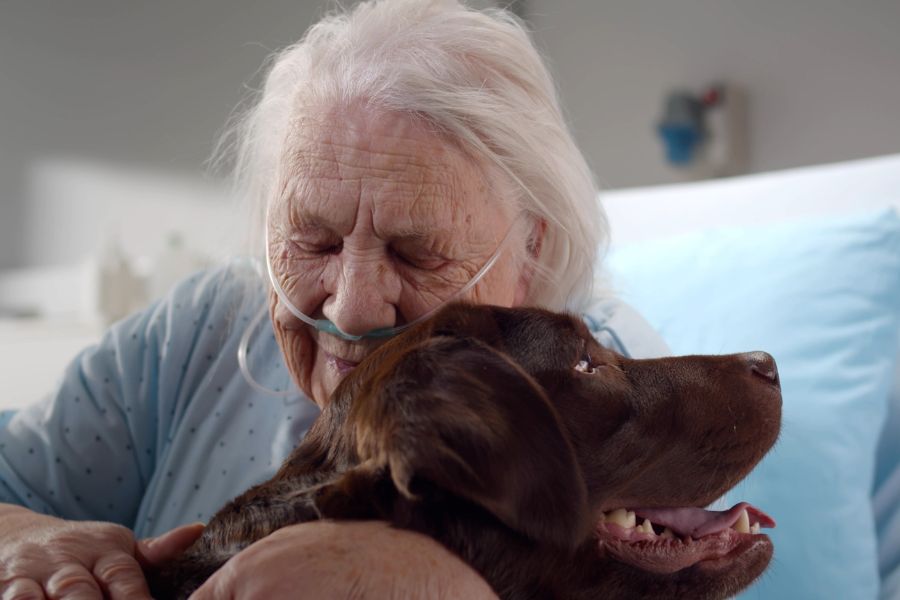
An elderly lady hugs a Pet Therapy dog in a hospital bed: the magic of a furry hug: the contact with animals is a cure for the body and a relief for the heart.
How to get your dog to do Pet Therapy: all the requirements
To make a conscious choice, it would be important first to attend the preparatory course for handlers, which is usually held by veterinary behaviourists, clinical veterinarians and dog educators who follow the cognitive-relational method and provide the correct and consistent guidance to choose the right dog for Animal-Assisted Interventions.
Thanks to lessons, books and materials that explain basic notions of managing a healthy and happy dog, breed types or how to raise a balanced dog, it is in fact possible to make a choice that takes into account the needs of the little furry one, his habits-aptitudes and also the pet mate’s day-to-day availability.
Moreover, in choosing a dog for Pet Therapy it is important to consider personal experience, that is, how much prior experience one has with dogs.
The starting idea is that there is no clear distinction between dogs who can and dogs who cannot do Pet Therapy. For example, even specimens such as mastiffs or Czechoslovakian Wolfdogs can do it; it depends on how good and capable the handler is at contextualizing the dog based on the need and at doing activities according to the breed motivations that belong to him.
To sum up: every dog can have potential to do Pet Therapy if the operator manages to put him in the right condition, and this is due precisely to the fact that it is “teamwork”, where each of the two parts – dog and operator – is fundamental for the success of the project.
Once all this has been considered and the little furry one has been chosen for this type of pathway, it is advisable to choose expert breeders, who have care and the right wealth of experience.
Naturally, getting a puppy is the best choice, because in this way you can give him the right imprint from the beginning, thanks to a specific and targeted education.
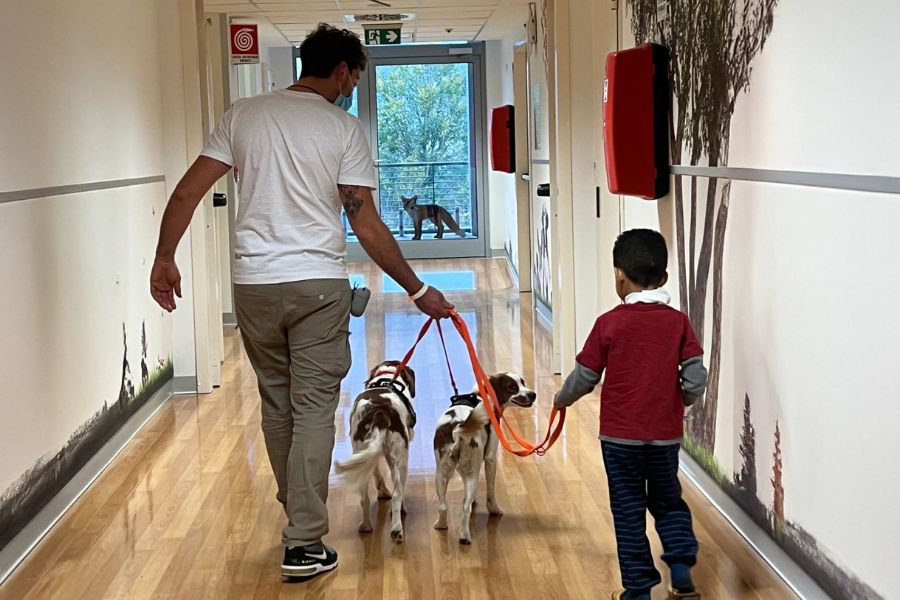
And here is our Lorenzo Fois with a little patient and the two four-legged little hearts during a Pet Therapy session.
How to do Pet Therapy with your dog?
Of course you can take this path even if your little furry one is no longer a puppy but, as we have seen, it is necessary to be trained and follow a pathway that allows you to learn, with the due care, all the notions necessary to train the dog for Pet Therapy.
Key word: zero improvisation. If we think our dog is suitable and we want to start this pathway also as a professional outlet, the rule is to get trained, take the exams, do the internship and thus become a professional figure in every respect, because this is what makes it possible to train the dog to take part in Animal-Assisted Interventions and work in this field.
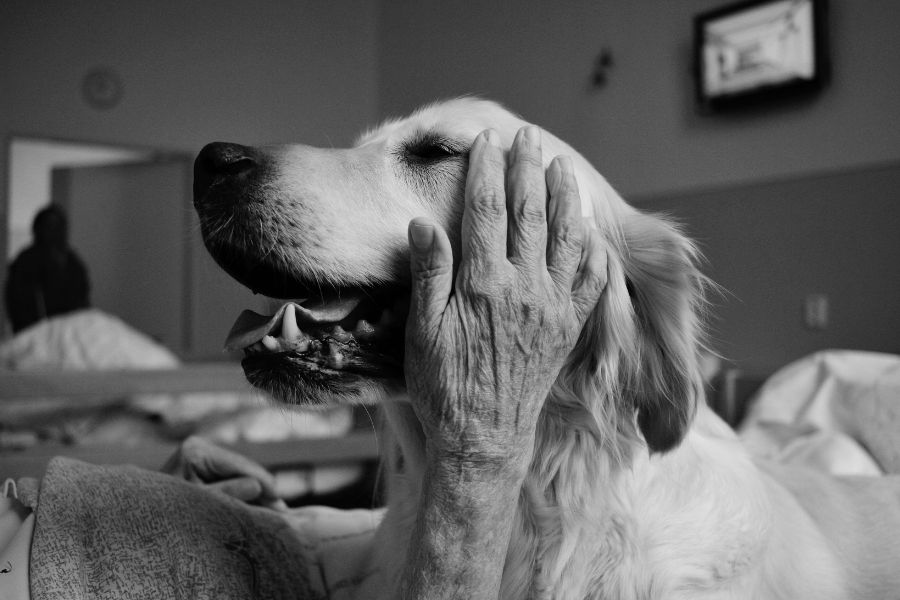
A Pet Therapy dog in a hospital ward: trust and patience, one stroke at a time.
Where does a Pet Therapist work?
Once the training is completed, with the internship, the writing and the discussion of the thesis, you register on Digital Pet, which is the portal for Pet Therapy operators in Italy and, hypothetically, you can start working right away.
Those who have a degree in the health or educational field (psychologists, doctors, nurses…) can also become project managers and intervention leads, therefore creating and supervising projects. Those who, instead, do not have a degree in this field can work as a handler (which is in any case the “key” role of the Interventions).
Handlers can work in projects in the health, educational and rehabilitation fields, and it is important to consider that, based on the profession that can be practiced thanks to the degree obtained, there are different professional opportunities, clarified on this page of the European Society for Animal Assisted Therapy.
In recent years Pet Therapy has had a great expansion and the regulations are evolving, therefore it is always good to look into it further, consulting the website of the Italian Ministry of Health and that of the “Istituto Zooprofilattico delle Venezie” to have up-to-date and authoritative information.
So far we have seen what Pet Therapy is and what it is for, how to become operators and what the possible professional opportunities are.
At this point, it is necessary to talk about a phenomenon that is unfortunately polluting the therapeutic role of animals and that, in several cases, can create real damage to their well-being.

In this photo showing Pet Therapy yoga with little goats, the little one seems to say: “But what am I doing here? I was feeling so good on the meadow, grazing fresh grass… Sometimes I really struggle to understand humans!”
Yoga Pet Therapy: why it was banned
It is called Yoga Pet Therapy or Puppy Yoga and it was formally banned with a note from the Italian Ministry of Health in April 2024, which specified the ban on using puppies in yoga practices.
What was it? Given that yoga is a millennia-old discipline that helps people regain physical, mental, emotional and spiritual well-being, Puppy Yoga involved the use of dog puppies who, during the final resting moment, were laid on people so they could cuddle them.
The problem is that, in many cases, the puppies were deprived of food and water so they would not relieve themselves and “disturb” the practice. In other situations they were even deprived of essential care and attention for their growth and well-being.
Moreover, once grown, the puppies did not have a defined, safe and welcoming destination and, hypothetically, they were replaced with smaller specimens because they were considered “magnets” for cuddles and caresses.
There is nothing wrong with cuddles and caresses, on the contrary, but following a complaint by an environmental association the Ministry intervened, defining the practice of using dog puppies in yoga sessions as illegal.
The Ministry specified that yoga with dogs can be carried out only with adult specimens (here is the Regione Lombardy page that specifies it), but we feel the need to open a parenthesis on this choice, which deserves to be carefully weighed.
Leaving aside the depth of yoga, which in its origins never envisaged the presence or intervention of animals, the question that arises spontaneously is whether it is necessary to involve animals in something that can very well provide benefits even without their presence.
Let’s take, for example, yoga with little goats, which has had a boom in popularity in recent years. In this case we can and must ask ourselves: are the animals treated in the best way? Are they happy to be in the company of people for a period of time, perhaps running the risk of being stepped on or even inadvertently hit between one asana and another? Or is it perhaps better that the little goats stay in their natural environment, on their meadows grazing fresh grass in peace?
We feel it is our duty to ask ourselves these questions and to always underline that no animal is a toy.
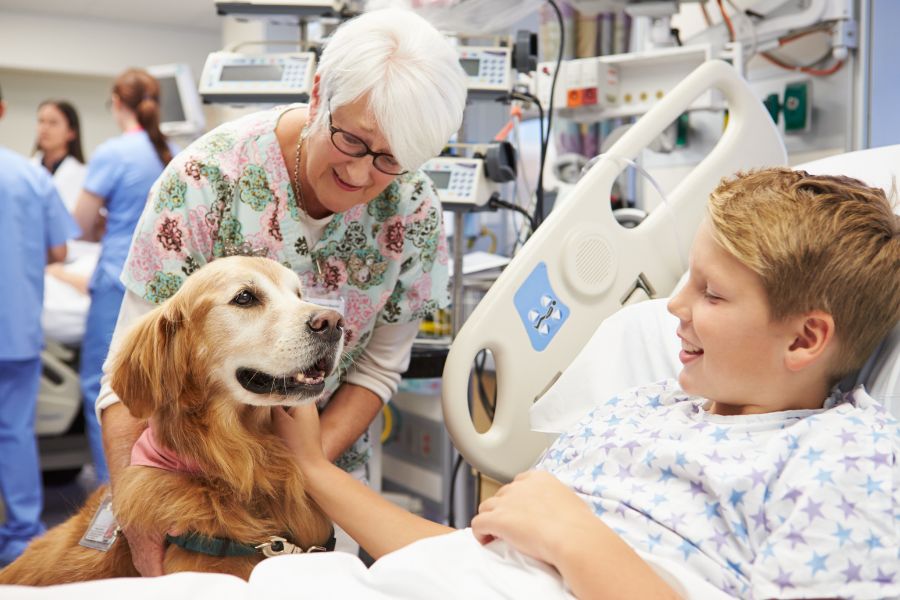
A Pet Therapy dog is being petted by a child hospitalized in the hospital: a sincere look has the power to improve every day, even the most difficult ones.
Rescue dogs and Pet Therapy: is there a link?
Since there is quite a lot of confusion about Pet Therapy, some people may think that rescue dogs and the little furry ones who work in Animal-Assisted Interventions do the same “job”.
The answer is no, there are no close links between these two dimensions, although it can sometimes happen that rescue dogs are also involved in Pet Therapy interventions.
Rescue dogs are four-legged angels who play a vital role for the community, and in a few weeks we will publish an article dedicated to them.
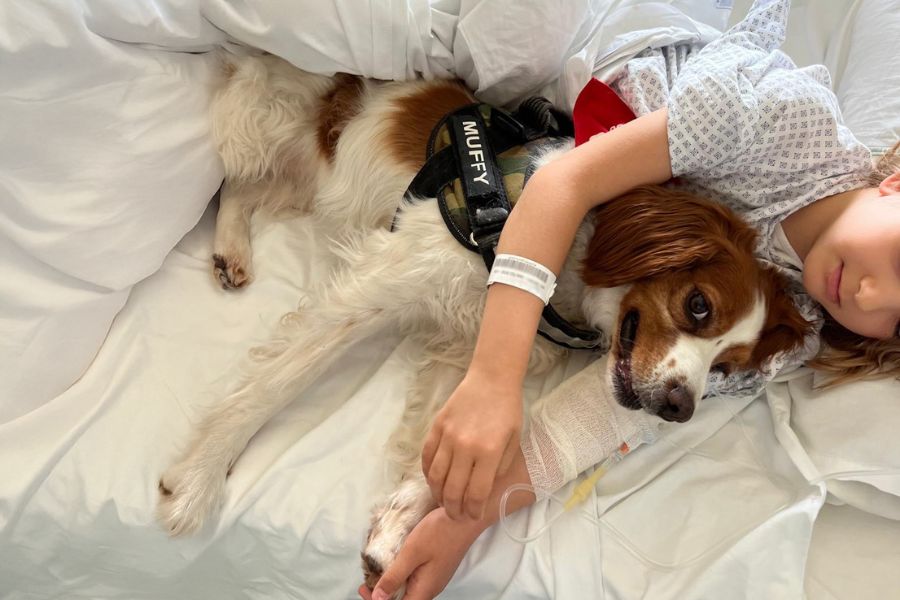
A little girl hugs a Pet Therapy dog in a hospital bed and the little furry one is thinking: “My new human friend is strong and courageous! I’m staying here with her today, so we can cuddle each other”
Pet Therapy cases in Italy
Let’s conclude this article by telling some Pet Therapy cases in Italy that make our eyes sparkle because they demonstrate the value of this co-therapy and, above all, show how much our four-legged friends can help people get through difficult times and feel better physically, emotionally and mentally thanks to their presence and to the immensity of the relationship between people and animals.
Pet Therapy for children: four-legged hearts in the ward
As written at the beginning of the article, to explore the topic of Pet Therapy we asked for information from Lorenzo Fois, dog trainer, lecturer and Dog Handler for Animal-Assisted Interventions, owner of a boarding facility (daycare for dogs) and two grooming salons, as well as head of “For A Smile Onlus” for the Triveneto area for Pet Therapy in the hospitals of Bassano – Schio – Verona (soon also in Vicenza).
Lorenzo, who as we said works with dogs in every respect (we can say that the little furry ones are part of every area of his life 🐶), confirmed to us that the principle of Pet Therapy is to do activities with children in the ward and dogs, aimed at removing the stress of hospitalization.
Children, in fact, struggle to stay in hospitals, to live their days in an environment saturated with mental heaviness, which generates emotional stress, therefore they need support, distraction and moments of play with the dog. Depending on the child and the type of issue, thanks to Animal-Assisted Interventions it is possible to create a relationship with the dog, in order to distract the child, thus creating positive moments.
However, we need to open a parenthesis: awareness of Pet Therapy in recent years has spread mainly because the media have highlighted its role in relation to Animal-Assisted Interventions in pediatric oncology wards. This is very important, but it is just as important to consider that this co-therapy is also used with elderly people or people with disabilities.
Moreover, it is always good to consider that animals are checked and constantly undergo veterinary examinations before entering hospital environments.
The “For A Smile Onlus” organizes numerous Pet Therapy projects and is constantly looking for new funders to carry forward this wonderful path, which you can also support through charity SMS messages or by scanning the QR code on the website page dedicated to donations.
Pet Therapy with greyhounds rescued from racing
In 2023, the Sant’Orsola hospital in Bologna launched a Pet Therapy project that involved some greyhounds rescued from racing in the UK, Ireland and Spain and included them, removing them from mistreatment, in the Pet Co-Therapy project to help children hospitalized in the hospital’s pediatric ward. This is the facility’s page that talks about it.
Also at Sant’Orsola in Bologna, a Pet Therapy project was launched that sees the joint work of the Italian Red Cross and the Associazione Amaci Odv.
Two furry nurses, Puntino and Isi, support the medical therapies that the young patients in the pediatric ward undergo and are protagonists of various activities ranging from play to interaction, to help children overcome the stress of illness and forced hospitalization.
And again, an example that melts the heart is the pioneering project activated at ULSS 8 in Vicenza, which allows children hospitalized for more than five days to receive a visit from their own dog in hospital.
The Pet Visiting project sees the collaboration of AdA, the Associazione Amici degli Animali, and can take place in the ward, with prior authorization from all the people involved, or in a specific area created ad hoc by the hospital.
These are examples of how little furry hearts can bring relief, well-being, joy and a desire to live to fragile people or those who are going through moments so difficult that they put their self-esteem and their ability to look at life with confidence and positivity at risk.
This is the strength of Pet Therapy, a co-therapy that today we have explored in depth and that we hope can spread more and more in Italy and in the world.
The presence of dogs and other animals, especially when guided and trained, becomes in fact a very special opportunity to rediscover the joy of life, thanks to those who feel it and transmit it in an innate and unconditional way every day: our four-legged furry loves.