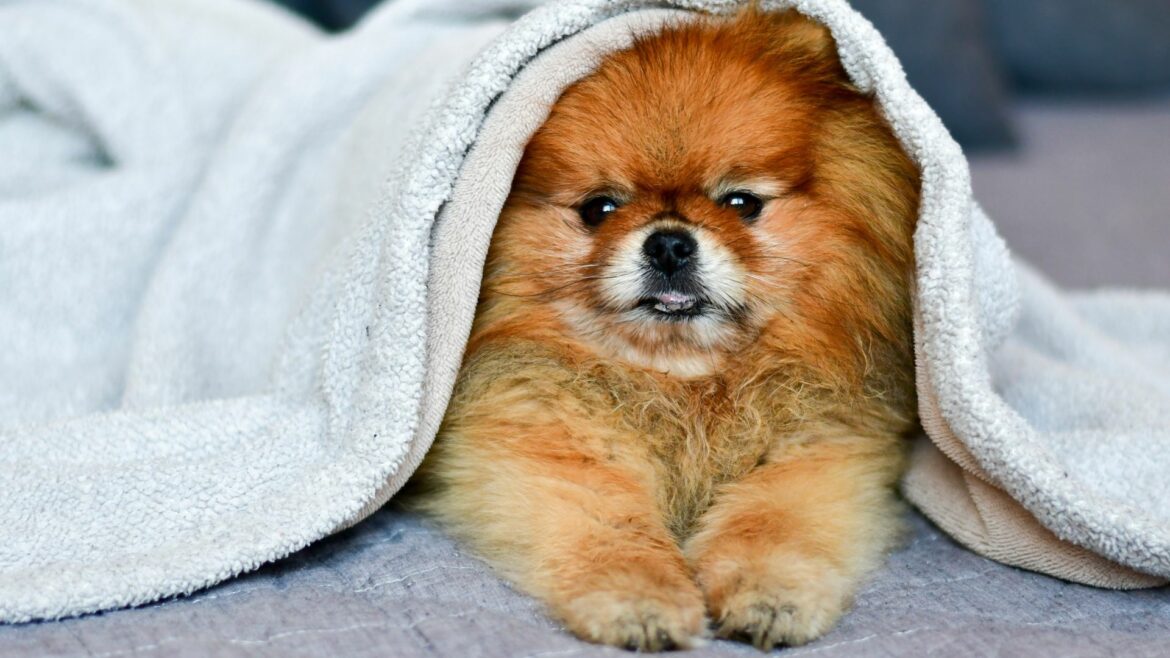
It is Sunday morning, we get up in a good mood, looking forward to a lovely breakfast enjoyed at a leisurely pace, with our four-legged love by our side. While the moka pot begins to gurgle and the aroma of coffee fills the kitchen, we start our Sunday morning cuddle routine.
We start from the little head, run our hands over the shoulder blades and back and… what is happening? We feel something rough, as if we were touching sandpaper… “Help! But, my love, have you turned into a camel overnight?”
At first, we might think we are still sleeping and try to give ourselves a pinch to wake up, but we soon realize that we are very much awake and, above all, that the soft and fluffy fur we loved stroking so much has now become as dry as the doormat at the entrance or like last year’s sweater that, oh dear, we accidentally washed at 60 degrees.
What on earth could have happened? Does my dog have dry fur? And what can I do to make it soft again, like a little cloud?
This situation occurs more commonly than we might imagine, which is why dry fur in dogs is precisely the topic of this article, in which we will see what the causes of dry fur in dogs are and what to do to make it soft and silky again. Then we will touch on a particular but very useful topic, namely the fact that dryness and dullness are not the same thing, even though they are often confused, and we will see what to do to solve both problems.
Dry fur or dull fur: what is the difference?
Dull and dry dog fur is a condition that can occur, but be careful, because dullness and dryness are not synonyms. Think of human hair which, when it looks lifeless and lacks reflections, is described as dull. The same happens with our furry friends’ coats which, when dull, lack brightness and shine. Dullness is therefore a characteristic that concerns appearance.
The situation is different when it comes to dryness, because dry dog fur involves texture, as it feels rough to the touch, coarse or even straw-like. In this case, the fur becomes dry because it lacks certain components that keep it soft, especially water, as we will see in a few lines.
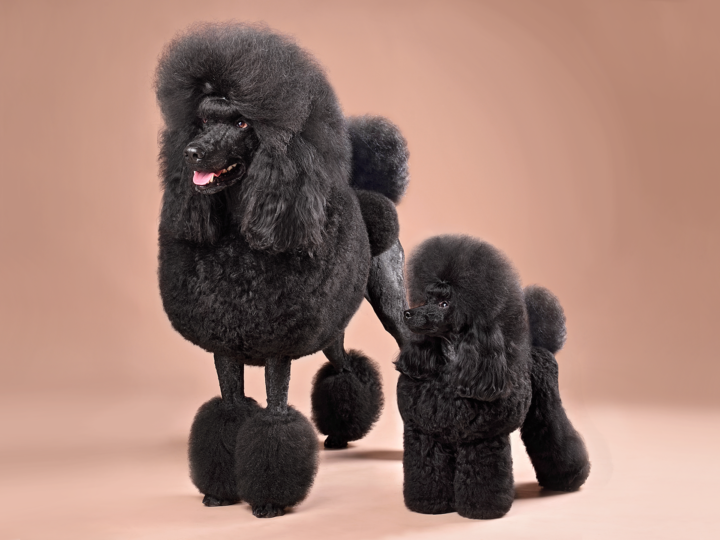
However, there is an important distinction to make regarding the rough coat. Here we are talking about a type of coat texture, typical of dogs such as the Schnauzer or the Wire-haired Dachshund. These coat textures are very fascinating and, ironically, do not need excessive hydration because, otherwise, the fur would become heavy, flattened and could even lose the physiological characteristics that contribute to the dog’s well-being and health, such as its protective function.
The term “rough” should therefore be used sparingly and never confused with the particular coat texture that characterizes certain dog breeds.
In any case, the distinction between dull fur and dry fur is now clear. The two problems can appear together, but they are not synonyms. A coat can be dry without necessarily appearing dull, or lose its shine while maintaining a certain softness. Understanding this distinction helps choose the products and treatments best suited to the actual needs of the coat.
If you want to learn more about why your dog has a dull coat that lacks shine, here you can find the Yuup! article dedicated to how to restore shine to your dog’s fur.
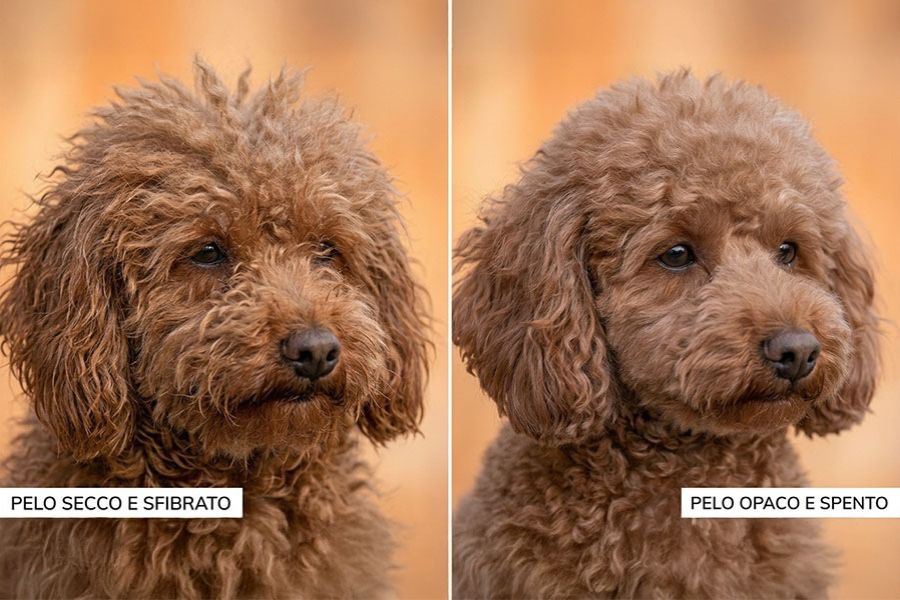
Texture and appearance: two different signs that deserve two different responses. (Image created with AI Firefly)
Why dogs have dry fur: the causes
The causes of dry fur in dogs can be many and also different from one another. Above all, they may involve alterations of the skin, nutritional imbalances and washing too frequently or using products unsuitable for the dog’s skin and fur.
Sometimes these causes may occur simultaneously and it is important to know them to understand how to safeguard the health and beauty of the coat, as well as the general well-being of our four-legged friend.
Dog skin types and pH
Dogs have different types of fur and also different skin types, which can be dry, oily, delicate or particularly sensitive and reactive.
This is an important starting point for understanding why factors such as nutrition, the frequency of washing, the products used and seasonal changes play a fundamental role in the well-being of the skin and, consequently, of the fur.
For example, dogs such as the French Bulldog and the English Bulldog have sensitive skin prone to irritation, especially between their adorable little skin folds. Even giant dogs such as the Dogo Argentino have delicate skin, which requires targeted care, and the same applies to other breeds such as Dachshunds, just to give an example.
This introduces the concept of the pH of a dog’s skin, which is different from that of us humans. pH is a value that indicates the degree of acidity or alkalinity and, in the case of the skin, becomes a reference point for maintaining its natural protective barrier. In other words, if we use products with a pH that is too far from the natural one, which is approximately 4.5-5.5 for humans and between 6 and 7.5 for dogs, we risk altering the well-being of the skin.
This explains why we should never use products intended for humans on our furry friends and why respecting the dog’s physiological pH is essential to preserve the health of the skin and, consequently, of the coat. Using products with a more acidic pH, therefore lower than the canine range of 6 to 7.5, would in fact mean altering the skin, and this could lead to irritation and the appearance of dry fur in dogs.
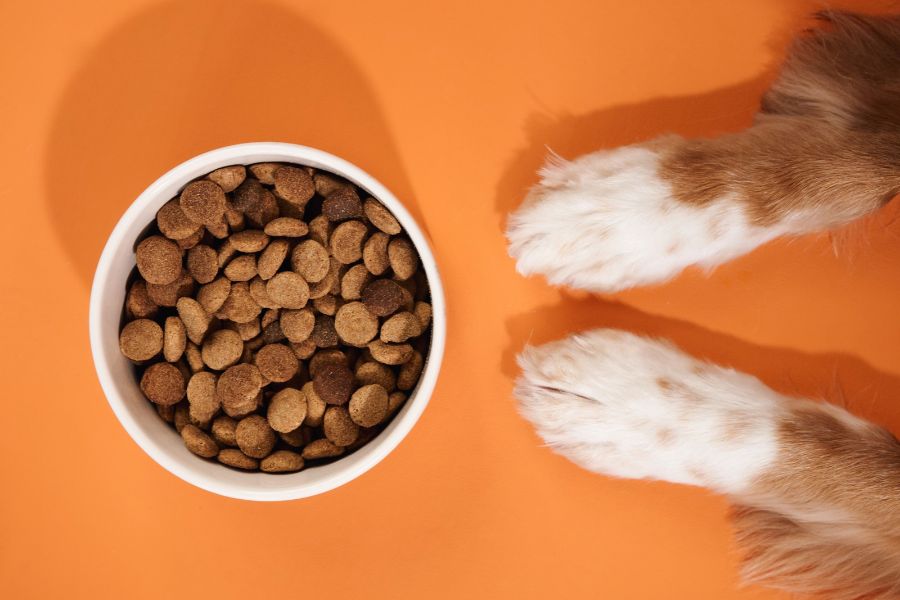
An unbalanced diet lacking in nutrients can be one of the causes of dry fur in dogs.
Unbalanced diet and fatty acid deficiency
The quality of nutrition is among the main factors for the well-being of our four-legged friend, and it is also essential for the health of the coat. To understand this, it is worth stopping to think about the structure of the fur itself, which is mainly composed of keratin, a protein that is produced precisely from what the dog eats.
The nutrients that the dog consumes therefore provide the “material” needed for the growth and renewal of the fur. We are mainly talking about proteins, and attention should focus not only on the right quantity, but also on quality and digestibility. This is why it is important to ask your trusted veterinarian and nutritionist for advice to create a diet that keeps our four-legged love healthy and takes into account the well-being of the skin and fur, especially when choosing particular dietary regimes, such as a vegan diet for dogs.
The risk, if the diet is unbalanced or consists of poor-quality foods, is that the dog may suffer from digestive problems and that the fur may become thinner, more fragile and more prone to breaking. An unbalanced diet can also make the coat less dense and, therefore, cause fur loss beyond the natural cycle of shedding and growth that we discussed in this article, with potentially serious consequences for the dog’s general well-being.
Still on the subject of nutrition, alongside protein intake, it is worth mentioning fatty acids, such as Omega 6, important nutrients for the structure of the skin barrier, and Omega 3, which help modulate the inflammatory response and are therefore very important if the dog has sensitive and reactive skin.
Omega 3 and Omega 6 are not in competition, quite the opposite: they should be considered nutrients that must be present in balanced amounts within the dog’s diet, and neither should be given priority over the other based on unreliable or untrustworthy information. Therefore, always ask your trusted veterinarian or nutritionist for advice!
Washing too frequently or using unsuitable products
To understand how important washing is for the health of a dog’s fur, let us think about our own hair. If we use aggressive cleansers or products unsuitable for our hair type, the damage is already visible after the first wash. Think, for example, of a person who has dry, fine hair and uses an aggressive shampoo. The hair will appear straw-like and extremely difficult to detangle. At the same time, we know that washing our hair every day can cause it to become damaged and weakened.
The same happens to our four-legged hearts, because excessive washing and unsuitable products, especially those with an overly aggressive composition, can damage the skin’s hydrolipidic film.
In simple words, the dog’s natural skin barrier is attacked and, consequently, it can dry out, making not only the dog’s fur dry, but also causing skin irritation which, in turn, leads to redness, itching and discomfort for our furry little heart.
Every product choice must be made carefully and here you can find an article on how to choose the right shampoo based on skin type. If you have doubts about how often to wash your dog, here you can find an article that explores the correct frequency of baths.
Season, shedding and home environment
Dry fur in dogs during winter is one of the most typical conditions and is due, among other causes, to the alternation between warmth and cold in different environments. When it is cold outside, in fact, the dog moves from a situation in which the air is equally cold and often humid to one in which it is warm and very dry. This change in temperature and humidity can subject the fur to thermal shock, thus causing it to dry out.
During the autumn season, some dogs also go through shedding, a process you can learn more about in this article dedicated to the shedding period and how to manage it.
The main protagonist of shedding is the undercoat, namely the soft, woolly and secondary layer that is shed precisely during this period to make room for the new fur that will accompany the furry one through the coming season. This is why, especially during this period, undercoat care is so important.
The fact remains that, during these weeks, the fur experiences a real whirlwind of emotions 🙂 and can become dry, especially if it is not treated with suitable products and specific tools, such as the Pink Massage grooming brush, which, thanks to its soft silicone bristles, allows for gentle and highly effective grooming.
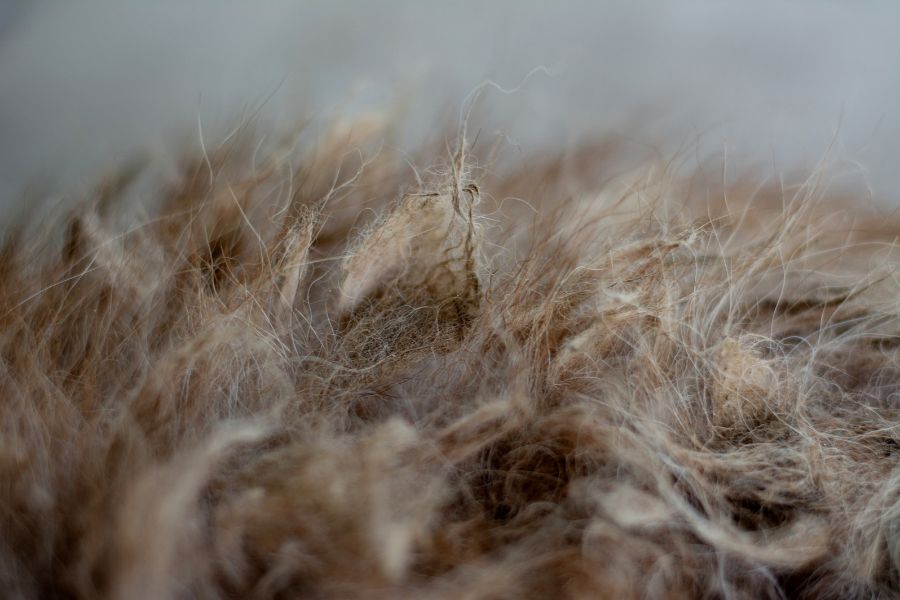
Fur that feels like “sandpaper” to the touch is the first sign to look out for.
When dry fur is a symptom of a disease
So far, we have explored the main causes of dry fur in dogs, but we have not discussed the possible diseases that can make it a symptom. In fact, there are some conditions and diseases that have dryness of the dog’s fur among their manifestations.
What are they and when should you take your dog to the veterinarian because of dry fur?
Let us start with the action of parasites, such as fleas, which, when they become unwanted guests, can make the fur drier than usual.
Allergic dermatitis can also manifest itself through dry fur and, if you want to learn more about this topic, we have dedicated an article to dermatitis in dogs.
Just as happens to us humans, if the thyroid does not function properly, hair can be affected and become dry, weak and damaged. The same can happen in dogs if they have thyroid problems, such as hypothyroidism.
We must also consider the harmful effect of Malassezia, a yeast naturally present on the dog’s skin that, for various reasons, can “go wild” and proliferate. The question is: how can you tell if your dog has Malassezia? The symptoms are usually redness, flaking, a very bad odor, greasiness and the fact that the dog tends to scratch himself intensely and compulsively, unfortunately making the situation worse.
Malassezia can therefore make the dog’s fur greasy, but also dry, damaged and unattractive, both because of the action of the yeast that has “gone wild” and because of the dog’s constant rubbing and licking in an attempt to find relief.
In any case, if there are any doubts and, above all, if the dog shows unusual symptoms, it is necessary to have him examined immediately by a trusted veterinarian.
How to hydrate dry fur in dogs
We have seen that the causes of a dry coat can be multiple, but how can we hydrate dry fur in dogs? It is essential not to confuse dullness with dryness and to act to restore the right level of hydration with suitable products, avoiding excessive washing, brushing the dog carefully and, between baths, using a dry shampoo that cleans the coat while providing the right amount of hydration.
Let us see how to hydrate dry fur in dogs in detail.
Why hydration matters
Hydration, meaning the right amount of water present in the tissues and, in this case, in the dog’s fur, is extremely important because, if the coat is dehydrated, it will inevitably tend to become drier, more damaged and straw-like.
However, we must pay attention to the main objective, which is to hydrate the skin and fur without pursuing a shiny effect at all costs. Of course, if the fur is healthy and well hydrated, it is possible to achieve a shiny effect with the right products, but well-hydrated fur is always soft and strong.
As we have seen, a separate mention must be made of fur with a rough texture, which, by its very nature, is naturally rough and must therefore be treated with specific products and techniques, such as stripping, which we have explored in detail in this article.
In other words, shine is a consequence and not the starting point, which must be hydration.
The right products, brushing and routine: the three pillars of hydration.
Choose the right products for deep hydration
To prevent and counteract dry fur in dogs, it is possible to use specific products that, together with a gentle shampoo that respects the pH of the dog’s skin, help maintain proper hydration and also provide a nourishing action.
Let us open a parenthesis on the difference between hydrating and nourishing, two fundamental functions for the health of our four-legged friend’s coat and skin. Hydration and nourishment are two different actions, but often complementary, and this is why the ingredients that perform them frequently work in synergy.
Moisturizing products help maintain the right level of water in the coat and skin, while nourishing products provide substances such as oils and lipids, which strengthen the skin barrier and make the fur softer and silkier.
For example, using a conditioner or a nourishing mask after shampooing, perhaps based on Sweet Almond Oil or natural Cocoa, Illipe and Shea butters, helps nourish the coat, resulting in softer, detangled and silkier fur.
Specific moisturizing oils and lotions instead help retain water in the coat and keep it healthy. As we have seen, these products often combine a moisturizing action with a nourishing one.
This is the case with Revive Intensive Oil, which contains nourishing ingredients such as precious Jojoba, Flaxseed and Sunflower Seed oils. Their action combines with the moisturizing and restorative action of Quaternized Keratin and Vitamin E, contained in microspheres with a soft shell made of natural Agar gum. When the dispenser is pressed, the microspheres break and the ingredients mix together, so they can help especially dry fur to regain strength, softness and silkiness. Revive can be used on dry fur, but it is also possible to add a few drops to the shampoo to enhance its detangling, moisturizing and restorative effects.
To work on the strength and structure of the fur, it is also possible to use Keratin Serum, a lotion based on Quaternized Liquid Keratin which, in addition to hydrating it, strengthens its structure because it seals the cuticles.
Oils and lotions of this type are ideal when the fur is dry, stressed and damaged, also because they have a film-forming action. In fact, they protect the coat from heat during drying, prevent it from drying out further and retain the right amount of water, necessary to preserve its proper hydration.
Brush Regularly
Ah, brushing! We will never get tired of saying that brushing the coat is the most important action we can take to keep it strong and healthy. This rule also applies in the case of dry fur in dogs, because brushing helps distribute the natural oils found on our little heart’s skin.
Many people wonder how to make their dog’s fur softer, and the answer is to use specific products and brush it regularly, using suitable tools that respect the fur and skin and make the process easier. In fact, regular brushing helps clean the fur, strengthens it and makes it beautiful, clean and shiny.
Between baths: dry cleaning
Dry cleaning is an ally of dog hygiene and a friend that helps us preserve the cleanliness and beauty of the fur between baths.
The important thing is to use gentle products, such as Yuup! Dry Shampoo, which cleanses with a soft foam that does not require rinsing. The formula contains moisturizing and nourishing ingredients such as Quaternized Keratin, Vitamins C and E, and Panthenol. It is completed with natural Aloe extract and natural Flaxseed extract, two ingredients that help restore the fur, protect it from external agents and keep it soft and shiny.
If your dog has dry fur, using a waterless shampoo is therefore a good idea to ensure hygiene and take care of the coat at any time.
Dry fur in puppies or senior dogs: what changes
What to do if a puppy has dry fur? Normally, puppies have an extremely soft coat and, if it becomes dry, it is important to understand why this happens. It could be due to some problem during growth, so it is important to ask your trusted veterinarian for advice.
In any case, it is important to give special care to our little furry hearts and approach their first baths with ultra-gentle products that respect their sensitive skin and coat.
Dry fur in dogs is, on the other hand, very common in senior dogs, because the coat may struggle to retain water. Our senior hearts therefore deserve extra attention, with the aim of helping the fur retain a greater amount of water and thus stay well hydrated. This brings us back to the advice to use moisturizing and nourishing products for bathing and fur care, which help keep it strong and soft.
Naturally, whether we are talking about puppies or senior dogs, it is essential to understand what type of fur they have, and here you can find an article that specifically discusses the different types of fur and their needs.
We can do a lot to improve dry fur in dogs and make it healthier, softer and stronger.
What to do starting today for a healthy and hydrated coat
There are some concrete steps we can follow to keep our dog’s fur healthy and hydrated:
- take care of nutrition and always make sure it is balanced;
- avoid washing too frequently and do not use aggressive products;
- use a moisturizing product after bathing, such as a conditioner, a mask or a lotion like Revive Intensive Oil together with shampoo, to help hydrate the coat and keep it strong and soft.
If we notice that our dog’s dry fur does not improve or think that there may be particular underlying causes, let us call our trusted veterinarian immediately for a consultation!
With the right care, an extra dose of love and a little patience, our dog’s fur can become soft, detangled and, above all, strong and well-structured again.
Give your dog’s fur the hydration it deserves: discover the Yuup! cosmetics range.