- Dog in heat: what it means
- When dogs go into heat for the first time
- The 4 phases of the estrous cycle
- How long does a dog in heat last?
- How often does a dog go into heat?
- How to understand if the dog is in heat: symptoms in the female
- How to understand if the dog is in heat: symptoms in the male
- Female dog in heat at home: how to manage it
- How does the fur change when the dog is in heat?
- What to do to support fur well-being
- How to calm a dog in heat
- Sterilization: pros, cons and timing
- The dog’s heat is a natural phase
One morning we wake up and our little female dog seems different than usual. She frequently licks her intimate parts, perhaps she is restless, has less appetite than usual and, above all, we notice some discharge on the floor or on the dog bed.
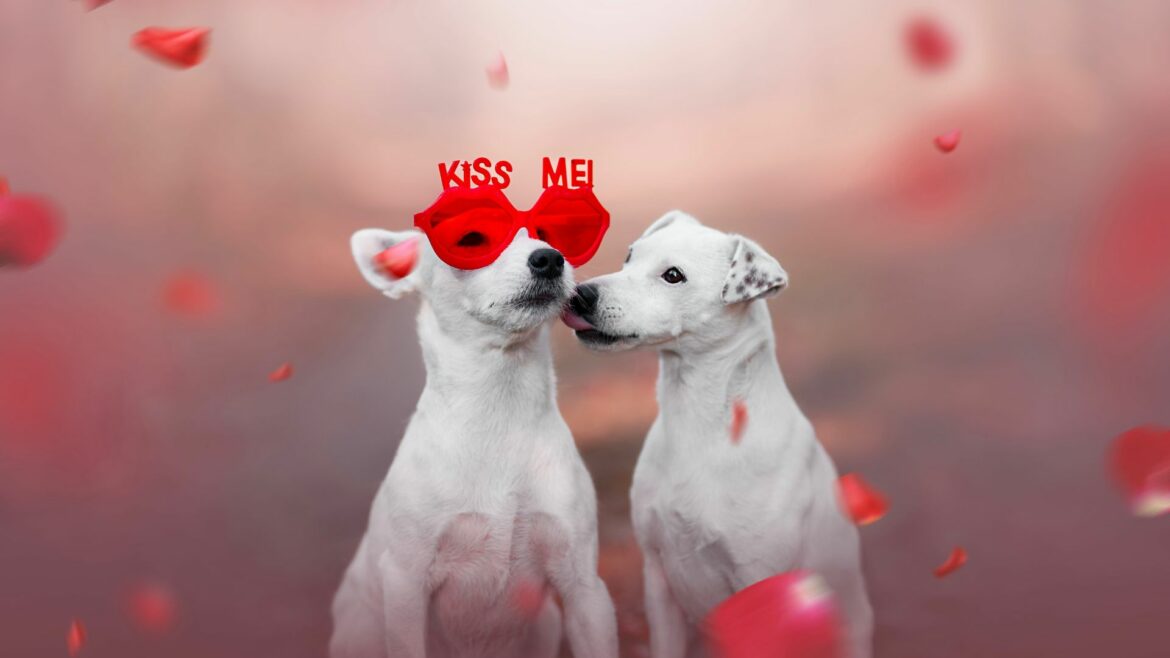
Most likely, the moment of heat has arrived and we are referring to little females, because this physiological and natural process mainly involves the “ladies,” even though males are certainly not immune to it, quite the opposite!
Heat in the male dog, in fact, is a process that we can define as “perennial” unless he has been neutered (and even in this case there are some exceptions, as we will see a few lines below).
Males, in fact, do not have a cycle like females but they very clearly notice the pheromones that female dogs spread throughout the universe. And so begins a true romantic hunt, made of leash pulling, agitation and that look that says more than a thousand woofs, because the male dog is looking for his canine soulmate with whom to start a family.
Joking aside, the topic of the dog in heat is very important and delicate, which is why in this article we try to address it with the utmost care both in males and in females.
The goal is to recognize the signs of heat in the dog, understand what happens and how to behave, thanks to practical tips that help us in daily management, including the care of the fur and general well-being during this very “passionate” period of dogs’ life.
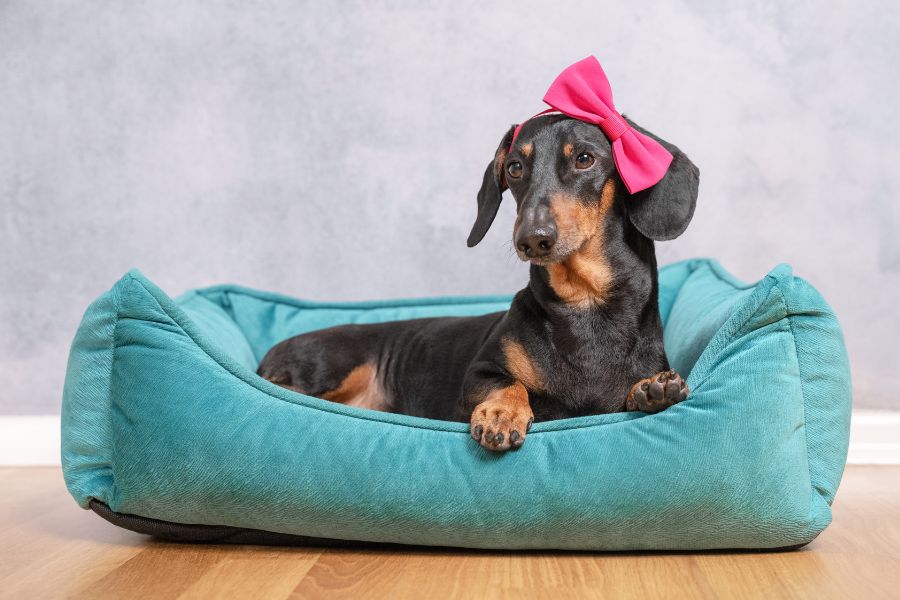
In female dogs, heat occurs about twice a year.
Dog in heat: what it means
When we talk about a dog in heat, we initially refer to females, namely to the estrous cycle, a process regulated by specific hormones that prepares their organism for reproduction.
This cycle is divided into four phases: proestrus, estrus, diestrus and anestrus, where each one has characteristics and is characterized by hormonal changes and, consequently, behavioral changes.
And the male dog in heat? It is natural to think that when the dog begins to get agitated and runs after furry little hearts, he is in heat, but it is not correct to say that the dog goes into heat.
Rather, the male dog responds and reacts to the pheromones that females spread and activates a series of behaviors directed toward mating.
In all this, it is good to consider that the duration of heat, frequency and also symptoms are very variable based on the dog’s size, breed and also his or her age.
When dogs go into heat for the first time
The first heat appears when the female reaches puberty which, in general terms, arrives between 6 and 24 months. There is a common tendency, namely that small-sized female dogs mature earlier than medium and large-sized ones. Basically:
- Small-sized female dogs: they can have their first heat as early as 6 months of life, sometimes even a little earlier;
- Medium-sized female dogs: often the first heat arrives between 8 and 12 months;
- Large and giant-sized female dogs: in this case, the first heat can arrive between 12 and 24 months.
Obviously, cases can vary, and it is common for this to happen.
At the same time, the so-called “silent heat” can also manifest, a state in which the cycle is there but the signs are not very evident.
The female dog may have minimal discharge, lick herself little, not change attitude in an evident way. In these cases, it can be difficult to notice the heat, which is why it is very important to have periodic check-ups with the veterinarian to monitor the cycle and its regularity.
The 4 phases of the estrous cycle
To understand the dog’s heat, it is important to explore the four phases of the little female’s estrous cycle. This also helps us understand that heat is not a single moment, because it is a true cycle, where behavior changes day by day due to the action of hormones.
We summarize it in a table.
| Phase | How long does it last? (approximately) | What happens during these days? | Is the dog fertile? |
|---|---|---|---|
| Proestrus | 9 days on average (but variable from 3 days up to 3 weeks) | The vulva swells, there are slight bloody discharges (blood), males begin to show attraction toward females, but females are not yet available for mating |
There is a low or absent possibility |
| Estrus | 9 days on average (but variable from 3 days up to 3 weeks) | The bloody discharges are lighter and there is availability toward the male, which is also shown by moving the tail sideways |
High probability that she is |
| Diestrus | About 2 months (with variations) | Receptivity ends and the female decreases the external signs. In this phase, pseudopregnancies can occur (meaning there are symptoms of gestation even if conception has not occurred) |
Absent |
| Anestrus | About 4-5 months (with variations) | Nothing happens: this is the period of reproductive rest |
Absent |
It is important to consider that all these periods are average and indicative, because every female dog is unique and so is her estrous cycle. Let us now see it in detail.
Proestrus
Proestrus is the phase in which heat begins in the dog. During these days we realize that something is changing because the vulva appears more swollen, there are blood discharges (often light and not abundant), the female dog licks herself more frequently and usually changes her behavior a little. How? She may become more affectionate but also more restless, but usually she is much more interested in smells.
This happens because, in this phase, she attracts males even though she is not yet available for conception. Can we define it as a sort of signal of availability for courtship? More or less, let us say that in this phase males can go crazy with love, while little females can reject them and also show themselves annoyed by their advances.
Estrus
Here we are at the fertile phase, estrus, the period of the cycle in which the discharges usually become lighter and female dogs show themselves available toward males. In what way? The most typical signal is called flagging and the female moves her tail sideways. In this phase pregnancy can happen more frequently, therefore if it is not desired it is very important to pay attention and take precautions. It is good to always keep the dog on a leash, avoid areas frequented by furry ones such as dog parks and pay attention also in the outdoor areas of the house.
Diestrus
Diestrus is the phase in which the female is no longer available for mating. During this period, the discharges are reduced, often considerably, as are the signals directed toward males. The organism of female dogs is still dominated by a hormone called progesterone, which is why it can happen that a pseudopregnancy manifests, also called hysterical pregnancy. In this case, there are the symptoms of a pregnancy, such as, for example, enlarged mammary glands (also with milk production), maternal behaviors with objects and a greater need for protection. It is a delicate phase and one that often resolves spontaneously, but it is always good to have check-ups and ask the trusted veterinarian for advice.
Anestrus
The moment of rest of the reproductive cycle has arrived and this phase is called anestrus. It is the longest period, during which the little female is not fertile and there are no typical signs of the dog’s heat. The function of this cycle is recovery, meaning the female dog regenerates to prepare for the next cycle.
Pay attention to anestrus that is too short: if we notice that this phase lasts little or that the cycles are irregular, it is very important to ask the trusted veterinarian for advice.
How long does a dog in heat last?
But how long does a dog’s heat last? This is a very common question and the answer is about 3 weeks. Or, better, this is the period in which the clearest symptoms of the dog’s heat manifest, from when the vulva of female dogs begins to swell until the end of the discharges.
In detail, the two phases of the cycle involved are:
- Proestrus, which lasts on average nine days;
- Estrus, which also lasts on average nine days.
If we add them together, we arrive at about 18-21 days, but it is important to consider that there can be significant variations from dog to dog.
Some little females, in fact, have significantly shorter heats, others longer ones. In total, the cycle (including the phases of heat reduction, diestrus and stop, anestrus) lasts 6-7 months before a new phase of the dog’s heat begins, namely before proestrus starts again.
In this context, what makes the cycle variable is size, because small female dogs tend to have more regular and also closer heats.
How often does a dog go into heat?
As seen, the dog’s heat cycle lasts on average 6 months, so the dog goes into heat twice a year. This is an average figure and regularity is an important health indicator for the reproductive well-being, as well as the general well-being, of female dogs.
If we notice that there are strange symptoms such as:
- Close cycles;
- Lack of heat when instead it should be time;
- Discharges that are too abundant or foul-smelling;
- Whining, intense thirst, abnormal behaviors;
- Sudden variations compared to previous cycles
Let us call the veterinarian immediately and ask for advice.
How to understand if the dog is in heat: symptoms in the female
When the female is in heat, the symptoms are physical and also behavioral. They can also be clear and evident, but also more subtle and less noticeable. Recognizing them helps determine if the dog is in heat and also in which phase she is, in order to adopt the most appropriate behavior.
The most common physical symptoms are:
- Swelling of the vulva;
- More or less abundant bloody discharge;
- Discharge that changes color from the first phase (proestrus) to the second phase (estrus) and then decreases in intensity in the third phase (diestrus), before disappearing in the last phase (anestrus);
- Tendency to lick the intimate parts frequently and more intensely;
- Tendency to pee more often;
- Changes in appetite, which usually decreases in the initial phase;
- A generally more sensitive body.
The symptoms of the female dog in heat from a behavioral point of view are:
- Restlessness;
- Seeking more cuddles and attention;
- Tendency to mark the places where we go for walks (and desire to go out more often);
- Tendency to want to play more, but also to be more nervous;
- Interest in furry males and, in the fertile phase, availability for mating.
As seen a few lines earlier, in the proestrus phase the female spreads hormones throughout the universe and males go crazy for her, but the moment of mating has not yet arrived, so she may pull back or even become grumpy with the little hearts who try to approach her.
In the estrus phase, instead, the behavior changes and there is availability for mating.
Pay attention, therefore, not to interpret these behaviors as “character-related” or as whims, because this is a refined mechanism where the little female heart is experiencing an intense and particular hormonal phase, which changes perception and behavior based on the moment in which she feels ready for mating and therefore to become pregnant with puppies.
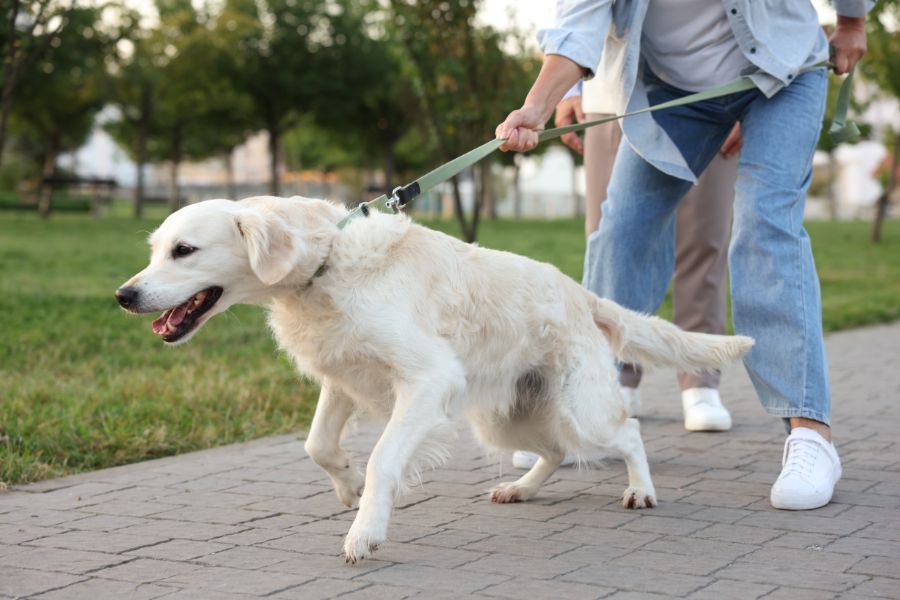
The dog may “pull” the leash more than usual, because he is attracted by the pheromones that the female in heat spreads.
How to understand if the dog is in heat: symptoms in the male
When we think of a dog in heat, the mind immediately goes to the little male Latin lover who would do anything to win over his she.
Of course, this is true, but let us remember that technically the male dog does not go into heat because, simply, he does not have an estrous cycle and does not go through periodic phases like the female.
We can say that the dog is always ready for mating, but his behavior changes when he perceives the love messages of female dogs that take the form of widespread hormones (pheromones). At that moment the dog has symptoms that can be very powerful, such as:
- Agitation and hyperactivity;
- Whining, crying or vocalizations;
- Frequent sniffing, desire to go for walks more often and decidedly strong leash pulling, with more frequent marking of the territory with urine;
- Escape attempts and competition with other males.
The male in love and passionate can become a true volcano, but it is fundamental to understand that at the base there is a physiological process. The dog is not “doing it on purpose,” he is responding to a super powerful mating instinct.
This is why he should not be scolded continuously, he would not understand, he is not doing anything wrong, he is only following his nature.
Rather, it is good to adopt suitable choices and behaviors, such as reducing opportunities to meet females, choosing quieter roads and walks and supervising him carefully.
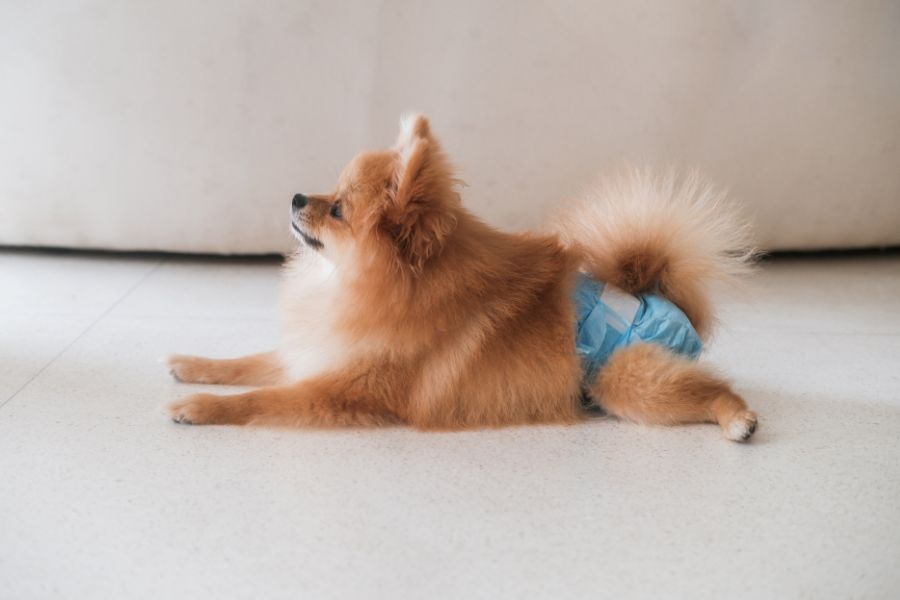
Heat in dogs can be managed at home with a few precautions and attentions.
Female dog in heat at home: how to manage it
How to manage a female in heat? The main answer is with love and patience, which give life to an organization that helps to get through this period without drama and making the furry little one feel cuddled and safe.
Domestic hygiene
When the female dog is in the proestrus and estrus phase, she has discharges and some can leave traces. What to do? Sanitary panties for dogs can be used, very useful especially for sofas and carpets, provided they are of high quality and do not prevent the skin from breathing.
If the female dog does not accept them, then more attention than usual is needed and, as always, the spaces must be kept clean and sanitized, for good general hygiene. As for the bath, in this period the skin can be particularly sensitive, especially if she keeps licking herself, therefore it is good to use delicate products suitable for the skin. Here you can explore how to wash the dog at home.
Management of outings
“But mom, dad, so when are we going out? I’m tired of waiting!” The female dog in heat really seems to look at us with a gaze that says a lot about her desire to launch herself into a walk. But it is precisely in the phases in which she is predisposed to conception that attention must be paid. How? First of all, the leash is a must (here you can find indications on how to go out for a walk with the dog), even when it is not mandatory and even if the little heart usually always listens to us. Let us consider that hormones have the superpower to change dogs’ priorities, therefore in these moments a normally cautious and calm female could transform into a super active and curious furry little one.
It is therefore recommended to avoid overly crowded areas and encounters with unneutered males. The question is: how can we know if they are? We cannot, so it is better to choose quiet places where there are low probabilities of finding little males.
Walking is, in any case, highly recommended, because it calms and reassures the female dog and, to enhance this moment without stress, you can also read the article dedicated to dog walking and the benefits of the walk.
Behaviors not to punish
It is likely that the female in heat is more active, that she has abnormal behaviors and that she may also sometimes become aggressive.
The golden rule is not to punish, because in this case it is the hormones that are speaking, not her. In these cases, it is important to maintain a calm and firm tone, respect her timing and avoid forcing, taking care to limit as much as possible the situations in which she may exaggerate her attitudes, such as, for example, a playground with many lively dogs attracted by her hormones.
Safe spaces at home
During heat, many females look for a quiet place where they can recover energy. The dog bed should always be this, but, if this is not the case, let us try to carve out a space for her with a little blanket and limit noises, perhaps lowering the TV or the music at home, especially when we see that she is resting.
If we live in an apartment, it is even more important to organize the spaces in the best way, to avoid the female dog being overstimulated. In this regard, we recommend reading the tips for living with a dog in an apartment.
Pay attention to intimate hygiene
Last but not least, intimate hygiene, which is very important during this period. It is good for the genital area to remain clean, but intimate cleansers for humans must never be used, because they have a different pH from that of the dog and can contain ingredients that irritate this very delicate area of the body. Better a gentle cleaning with lukewarm water.
The choice of shampoo is also very important and the advice is to choose delicate and high-quality formulas. If you have doubts, here you can find a useful guide on how to choose dog shampoo. In particular, you can use the Yuup! Home line, which includes delicate shampoos, hydrating conditioners and nourishing masks, which help keep the fur clean, soft and hydrated even between one grooming session and another.
How does the fur change when the dog is in heat?
Heat in dogs is a process that, due to hormonal fluctuations, involves the entire organism, including skin and coat.
Hormonal effects on the fur
In some females, the coat may:
- Become duller, dry and dehydrated;
- Lose shine;
- Be more subject to falling out;
- Feel less compact and strong to the touch.
Attention: these changes in the fur during the cycle do not happen in all females, even though many people notice that there are variations, especially in the strength and shine of the coat.
Stress and impact on the coat
In fact, it is good to consider that heat in dogs can generate stress, both physical and emotional, and we know how much it can cause fur problems. Stress dulls and weakens the fur and, to explore the topic further, you can also read the article on stress in dogs, causes, symptoms and remedies. Moreover, it is important to brush the fur gently, using suitable tools such as PinkBrush, which facilitates brushing and makes it more pleasant.
More sensitive skin
When the female is in heat, the skin can become more sensitive and reactive, perhaps drier or even itchy, which leads the furry little one to scratch, unfortunately worsening the situation. For this reason, it is good to avoid frequent baths and always use very delicate products, such as shampoos with a softening and soothing effect.
What to do to support fur well-being
The watchword is sweetness; here are some good practices to follow to support the well-being and beauty of the coat even when the female is in heat:
- Always offer balanced nutrition;
- Evaluate any supplements only on veterinary advice;
- Brush the coat every day, gently and without ever forcing, to air it and remove dead fur without irritating the skin;
- Always use specific cleansing products for dogs, delicate and nourishing.
- Moreover, it is good to have a reassuring routine and, as seen, to reduce loud noises and overstimulation, which are sources of stress and can worsen the health of the coat, as well as the dog’s emotional well-being.
To better understand the various phases of the dog’s fur and understand how to keep it healthy, you can explore further here: dog fur, growth, types and care.
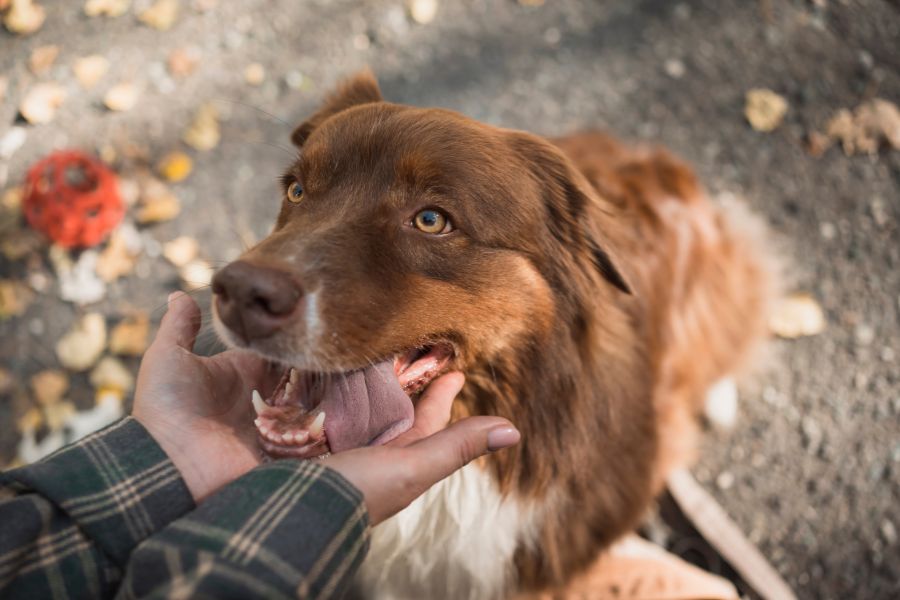
To calm a dog in heat, patience and lots of love are needed.
How to calm a dog in heat
It is normal to wonder how to calm a dog in heat; here are some useful tips to manage agitation, both for females and males:
- No to strange or unfamiliar routines: it is good not to suddenly change habits so as not to generate stress in the dog, in a period that is already stressful in itself;
- Yes to more physical activity: let us try to go out for walks more, compatibly with the phase of the cycle, to release tension, always being careful to avoid areas frequented by other dogs;
- Yes to mental stimulation: games and activities are welcome and, if you want to explore this topic further, here you can find an article that talks precisely about mental activation in dogs;
- Yes to extra cuddles: the dog must feel safe and protected and, since we know the infinite therapeutic power of cuddles, in this period we can give him plenty of them.
Sterilization: pros, cons and timing
Dog sterilization is a topic that must not be approached lightly or with pre-set slogans. It is a choice that must be evaluated with the trusted veterinarian and that deserves to be made following deep reflection on the dog’s future.
In fact, according to the WSAVA (World Small Animal Veterinary Association) guidelines, sterilizing a dog is a decision that must be based on scientific evaluations, on the dog’s well-being and on the dog-person relationship.
Possible benefits
Among the benefits of sterilization for females there are:
- Prevention of unwanted pregnancies;
- Possible decrease in the risk of mammary tumors, especially in some dog breeds;
- Prevention of Pyometra, a serious uterine infection that can affect unsterilized female dogs and also cats;
- Easier management of coexistence with other dogs.
Why have we not included the elimination of dogs’ heat among the benefits? Because in the case of females, castration eliminates heat, but for males the matter is different.
The male dog, in fact, can show typical behaviors of heat such as excitement or mounting even if he has been sterilized, because he maintains the sexual instinct. In any case, it is always good to ask the trusted veterinarian for advice.
Considerations to evaluate
Sterilization of males and females leads to changes that must be monitored, among which the main ones are:
- Tendency to gain weight;
- Possible changes in the fur in some breeds (it may become more woolly and also thicker);
- Possible effects on growth and development if sterilization is done too early (especially in large-sized dogs).
When to sterilize the dog? The answer can only be given by the trusted veterinarian based on the “direct” knowledge of the furry one. This is also the line followed by ANMVI (Italian National Association of Veterinary Doctors), which does NOT approve a standard period for dog sterilization and recommends always evaluating case by case the correct age to perform it.
There are pharmacological contraceptives on the market but, also in this case, it is fundamental to talk to the veterinarian to understand the pros and cons of this choice.
The dog’s heat is a natural phase
Today we have seen that heat in dogs is a natural phase that requires attention, patience and a little extra care for our furry ones.
The ones playing the match, in this case, are hormonal changes and it is certainly not easy to put them on the bench. The good news, however, is that we can manage this phase with a careful choice of walks, preparing and maintaining a quiet environment, ensuring delicate hygiene and taking care of the dog’s fur and skin.
And, since during heat skin and fur really need an extra dose of cuddles, the advice is to always choose high-quality products that respect the dog’s pH, such as Yuup! shampoos, conditioners and masks.
In particular, the Home line responds precisely to this need, with many delicate products suitable for every phase of the dog’s life, even those that require more sweetness and attention such as heat.